
Mont-Saint-Bruno National Park sits just 20 minutes east of Montreal, offering 30+ kilometers of well-marked trails that wind past five pristine lakes and through ancient maple forests. This hidden gem draws hikers from across Quebec and the northeastern United States who want quick access to quality trails without fighting crowds or driving deep into remote wilderness. You’ll find everything from easy 45-minute lakeside loops perfect for families to challenging ridge hikes that reward effort with sweeping views of the St. Lawrence Valley.
The park’s compact 8.84-square-kilometer footprint makes navigation straightforward, even for first-time visitors. Unlike sprawling wilderness areas where you can easily lose half a day just reaching a trailhead, Mont-Saint-Bruno lets you park, grab your pack, and hit the trails within minutes. The numbered trail system connects seamlessly, so you can customize loop lengths based on your time and energy without backtracking.
What makes this destination especially appealing for New England and Northeast adventurers is its position as a perfect weekend add-on to Montreal visits or a standalone day trip from Vermont border crossings. The park stays open year-round, transforming into a snowshoe and cross-country ski destination when winter arrives, giving you reasons to return across multiple seasons.
Why Mont-Saint-Bruno Is Worth the Trip
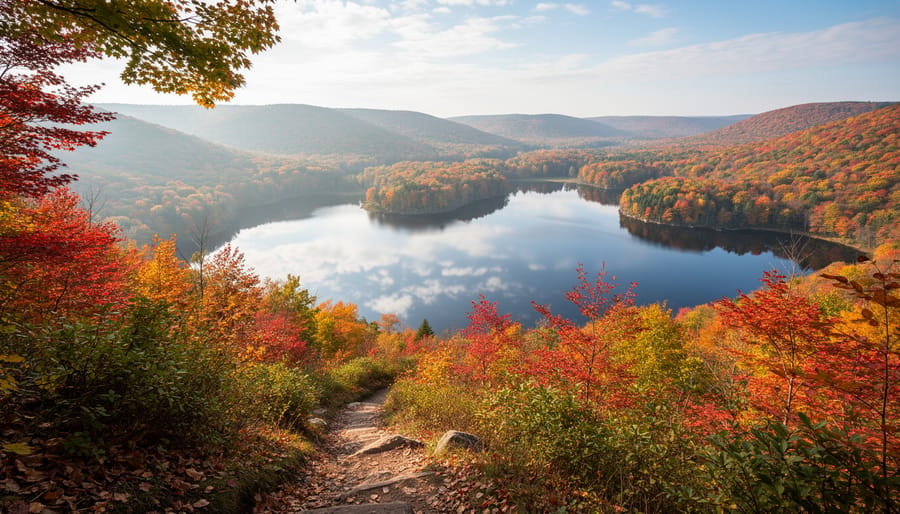
Mont-Saint-Bruno stands apart from typical hiking destinations through a unique combination of natural beauty, accessibility, and variety that’s hard to match. Perched atop one of the rare Monteregian hills, ancient volcanic formations that punctuate Quebec’s flat St. Lawrence plain, this national park delivers dramatic elevation changes and panoramic views without the grueling climbs of mountain ranges farther north. The geology alone tells a fascinating story: these hills formed over 100 million years ago when magma pushed upward through sedimentary rock, creating the distinctive landscape you’ll hike through today.
What truly sets this park apart is how it layers multiple experiences into compact, manageable trails. Five interconnected lakes shimmer through the forest canopy, while heritage apple orchards from the 1800s still produce fruit along historic pathways. You’ll find everything from wheelchair-accessible lakeside paths to rocky scrambles up to the 218-meter summit, all connected by Quebec’s signature color-coded trail system that makes navigation nearly foolproof even for first-time visitors.
- Rare Monteregian hill geology offers dramatic landscapes within easy reach
- Historic apple orchards and cultural heritage woven throughout the trails
- Five interconnected lakes create diverse waterside hiking experiences
- Well-marked trail network accommodates all skill levels in one location
- Just four hours from Chesterfield and accessible from throughout New England
- Spectacular fall foliage rivals Vermont’s best displays
- Family-friendly infrastructure with facilities and shorter loop options
The park’s location makes it remarkably accessible for a Quebec destination, four hours from Chesterfield puts you in a different country without the commitment of a week-long expedition. Come September through mid-October, the maples explode into reds and golds that match anything you’ll see in New England, but with the added charm of lakeside reflections and that distinctly Quebecois blend of French signage and warm hospitality. Families appreciate the genuine facilities, maintained restrooms, and trail options that let everyone from toddlers to grandparents find their comfort zone.
Top Hiking Areas and Trails
1. Le Grand Tour (The Complete Loop)
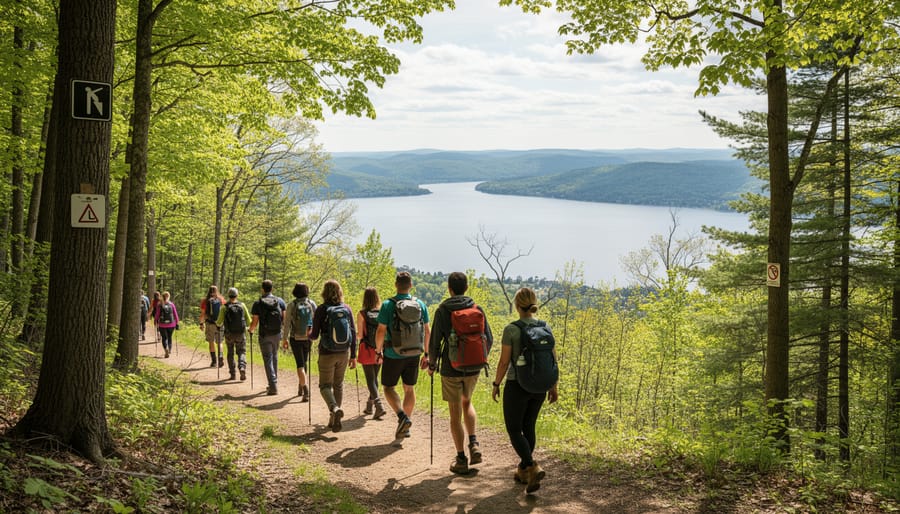
Le Grand Tour lives up to its name as the quintessential Mont-Saint-Bruno experience. This 6-7 kilometer loop encircles the park’s core, weaving through mixed hardwood and conifer forests while connecting all five lakes. You’ll cover roughly 200 meters of elevation change as the trail climbs gentle slopes and descends to lakeside stretches, making it accessible for most fitness levels.
Plan on 2-3 hours for the complete circuit, though photographers and families with children often take longer. The trail rewards steady progress with diverse scenery: you’ll pass the mirror-still waters of Lac du Moulin, wind through sugar maple groves that explode in crimson and gold each fall, and catch glimpses of Mont-Saint-Bruno’s distinctive Monteregian geology where ancient volcanic rock pushes through the landscape.
Wildlife sightings happen regularly along quieter stretches. White-tailed deer browse near the lakeshores in early morning, while red squirrels chatter from overhead branches. The well-maintained path alternates between packed dirt, wooden boardwalks over wetland areas, and occasional rocky sections that require basic footing awareness.
What makes Le Grand Tour the signature hike is its completeness. First-time visitors get the full Mont-Saint-Bruno experience in one go: lakeside tranquility, forest canopy, moderate climbs, and panoramic moments where the trail breaks from tree cover to reveal the surrounding Quebec countryside. The color-coded trail markers keep navigation straightforward, and multiple access points mean you can shorten the loop if needed.
2. Sentier des Lacs (Lakes Trail)
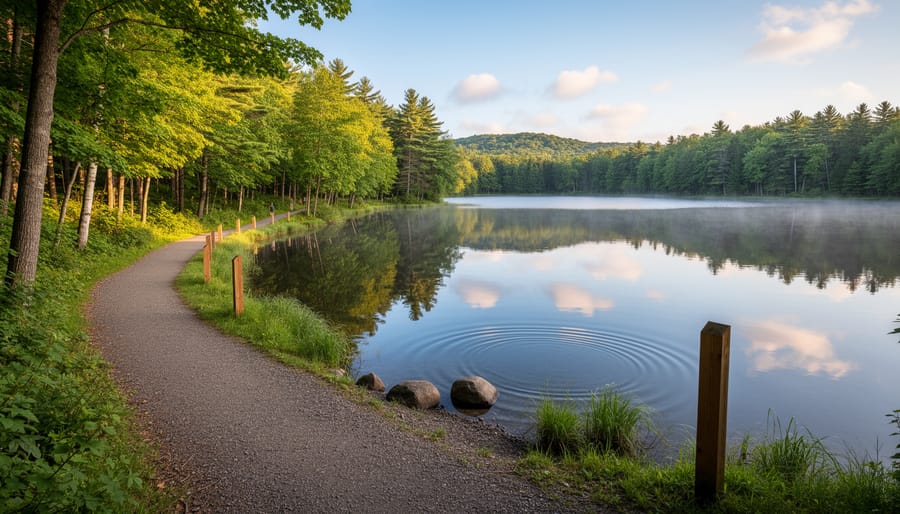
The Sentier des Lacs offers a gentler alternative to the complete loop, wrapping around the park’s five interconnected lakes over roughly 3-4 kilometers of mostly flat, well-maintained trail. This route links Lac du Moulin, Lac des Bouleaux, Lac Seigneurial, Lac à la Tortue, and Lac des Atocas in a peaceful circuit that keeps water views constantly in sight.
Families with young children gravitate toward this trail because it skips the steep climbs while delivering plenty of visual rewards. The path winds close to the shorelines, offering clear sightlines where kids can spot turtles sunning on logs, ducks paddling near the reeds, and dragonflies hovering over the water. Surface conditions stay smooth enough for jogging strollers in most sections, though a few short stretches near lake transitions may have exposed roots.
Strategically placed benches appear every few hundred meters, positioned at scenic overlooks where you can pause for snacks or just soak in the stillness. Several designated picnic areas with tables sit right at the water’s edge, making this an ideal route for packing a lunch and breaking the hike into leisurely segments.
The entire loop typically takes one and a half to two hours at a relaxed family pace, including stops. Early morning visits reward you with mirror-still lake surfaces and fewer crowds, while late afternoon light creates beautiful reflections across the water. The trail’s gentle nature doesn’t mean it lacks beauty, each lake presents distinct character, from the forested intimacy of Lac à la Tortue to the wider openness of Lac Seigneurial.
3. Sommet Trail to the Peak
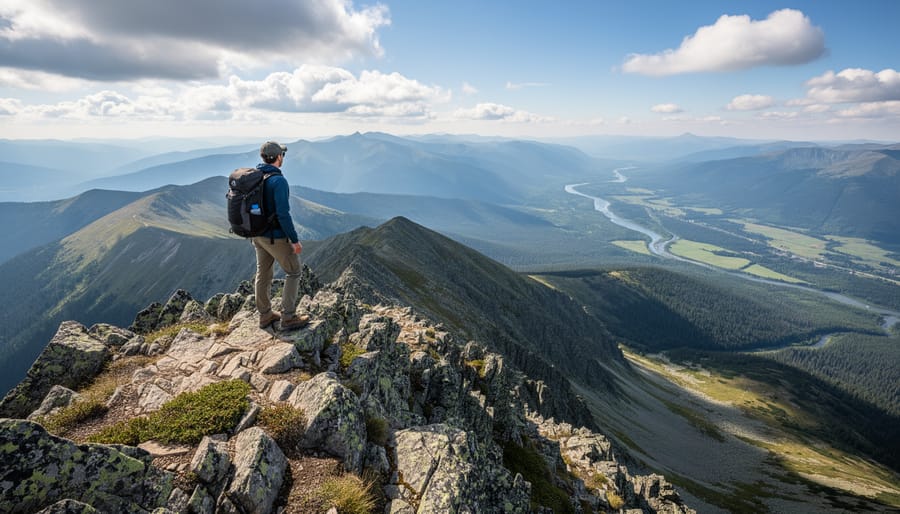
The summit trail delivers Mont-Saint-Bruno’s most rewarding climb and the park’s best views, making it a favorite for hikers who want a bit more challenge without committing to a full-day mountain expedition. The route to the 218-meter peak gains about 100 meters of elevation over roughly 2 kilometers, which means you’ll feel the climb in your legs but won’t need mountaineering skills.
Expect a mix of terrain as you ascend. The lower sections wind through hardwood forest on packed earth trails, then transition to rockier footing as you near the summit. Tree roots cross the path in places, and some short, steeper pitches require careful foot placement, especially after rain when rocks can be slippery. Hikers in decent shape typically reach the top in 30 to 45 minutes, though you can take it slower if needed.
The payoff at the summit is genuinely spectacular. On clear days, you’ll see across the St. Lawrence Valley to downtown Montreal’s skyline, the neighboring Monteregian hills rising from the flat surrounding plains, and farmland stretching toward the Eastern Townships. In autumn, the view becomes a sea of red and gold canopy punctuated by the park’s five lakes below.
This trail sees more traffic than others because of the views, so weekday mornings offer quieter experiences. Bring trekking poles if you have wonky knees, the descent can be harder than the climb. The summit itself has a small cleared area perfect for a snack break before heading back down.
4. Heritage Orchard Loop
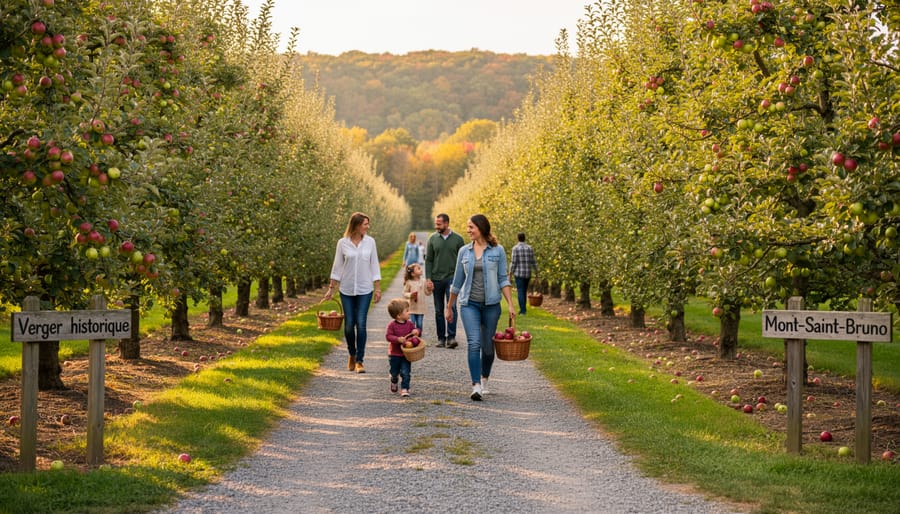
The Heritage Orchard Loop offers something different from typical mountain trails, a gentle walk through living history where gnarled apple trees planted generations ago still bear fruit each season. This roughly 2-kilometer route winds through the park’s historic orchards where monks from the nearby Abbey of Saint-Benoît-du-Lac once cultivated heritage apple varieties, some dating back over a century.
The flat, well-maintained path makes this an ideal choice for families with young children, older hikers, or anyone wanting a relaxed stroll with cultural depth rather than elevation gain. Educational signs along the route explain the orchard’s history, identify different apple varieties, and describe traditional cultivation methods used before modern farming. You’ll walk beneath canopies of twisted branches that have weathered countless seasons, their character-filled forms providing excellent photography opportunities.
Timing matters here. Visit during late spring when apple blossoms blanket the trees in clouds of white and pink, filling the air with sweet fragrance and attracting pollinating bees. The fall harvest period transforms the orchard into a different spectacle, branches heavy with ripening apples in shades of red, green, and gold, set against autumn foliage. Many visitors combine this trail with a picnic at one of the nearby benches, making it as much a cultural experience as a nature walk.
5. Wildlife Observation Trails
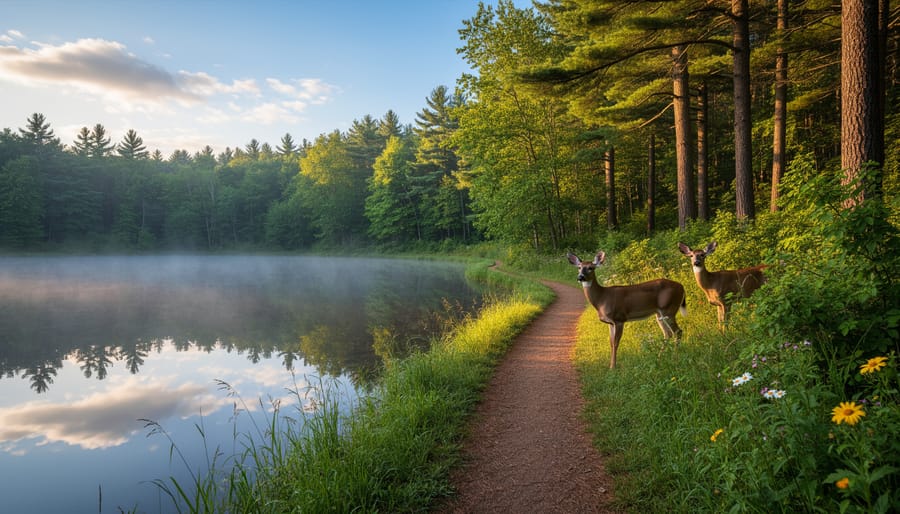
The park’s eastern and northern trail sections remain blissfully quiet even on busy weekends, making them ideal for wildlife encounters. Sentier du Lac à la Tortue (Turtle Lake Trail) and the forested paths around Lac des Atocas offer the best odds for spotting white-tailed deer, particularly during dawn and dusk hours. Watch the lake edges for painted turtles basking on logs and great blue herons fishing in the shallows.
Birders should bring binoculars for spring migration when warblers, thrushes, and Baltimore orioles move through the canopy. The lake areas attract wood ducks and hooded mergansers, while pileated woodpeckers drum in the mature forest stands. Red-tailed hawks and turkey vultures circle above the summit during warm afternoons.
Timing matters enormously. Arrive before 8 AM on weekdays for the quietest conditions and most active wildlife. White-tailed deer feed in the meadow areas near the heritage orchard during early morning hours, while weekends after 10 AM see mostly chipmunks and the occasional curious squirrel.
Spring and fall offer peak wildlife activity as animals prepare for breeding season or winter. Summer mornings bring frog choruses from the wetland edges. Winter tracking reveals fox, rabbit, and deer movements through fresh snow, turning a quiet hike into a detective’s game.
Move slowly, speak softly, and pause frequently. Wildlife rewards patience far more than distance covered.
6. Cross-Country Ski Trails (Winter Hiking Option)
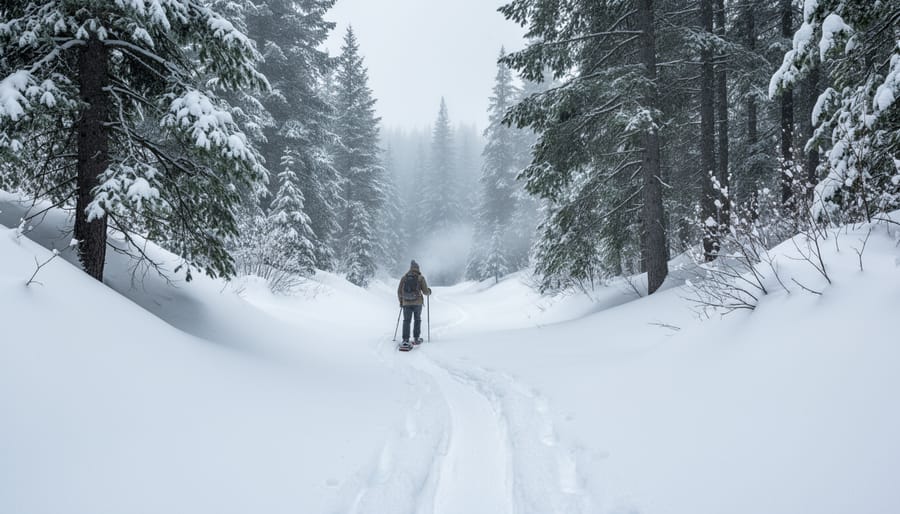
When snow blankets Mont-Saint-Bruno, the park transforms into a serene winter wonderland that offers a completely different hiking experience. Many of the summer trails remain open for snowshoers and winter hikers, though you’ll be sharing the landscape with cross-country skiers gliding along groomed tracks. The park maintains separate routes where possible, but some sections overlap, so watch for ski tracks and step aside when you hear skiers approaching.
The winter atmosphere is noticeably quieter than peak summer and fall visits. The crowds thin out considerably, the frozen lakes create stunning white expanses framed by bare branches, and the snow muffles sound in a way that makes the forest feel almost magical. You’ll need appropriate winter footwear with good traction, microspikes or snowshoes depending on conditions, and should dress in layers since you’ll warm up quickly on uphill sections.
Trail conditions vary throughout winter. After fresh snowfall, breaking trail can be work until the path gets packed down. Mid-winter typically offers the most reliable conditions with established tracks. Check the park’s winter trail status before heading out, as some steeper sections may close during icy periods or after storms for safety reasons.
7. Accessible and Adapted Trails
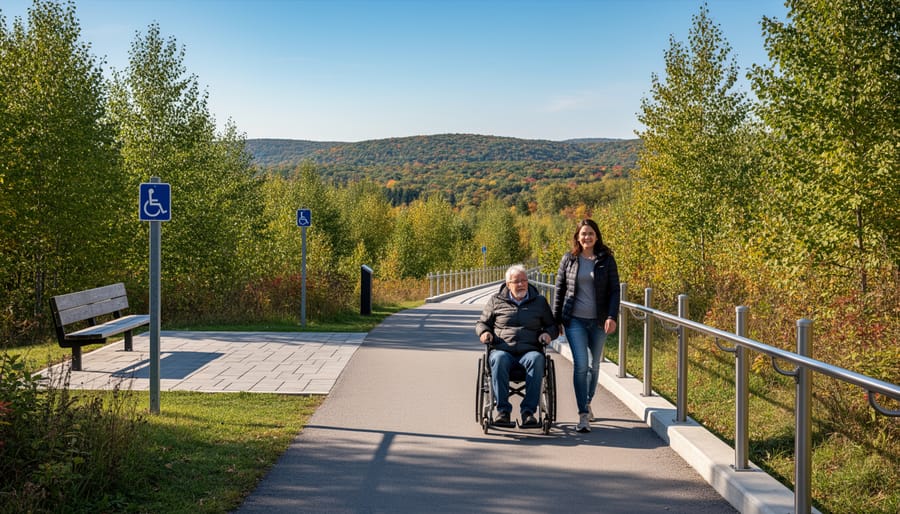
Mont-Saint-Bruno National Park demonstrates genuine commitment to inclusive outdoor access with thoughtfully designed pathways that welcome visitors using wheelchairs, walkers, or strollers. The park’s showcase accessible route follows a paved, firm-gravel surface from the visitor center around portions of Lac du Moulin, maintaining gentle gradients (typically under 5%) that meet accessibility standards. This 1.2-kilometer adapted section features wide, smooth pathways with proper drainage, strategic rest benches every 100-150 meters, and accessible viewing platforms overlooking the lake.
The terrain around Lac Seigneurial offers another excellent option, with compacted crushed-stone trails and minimal elevation change. These accessible trails provide genuine nature immersion, not just parking-lot periphery walks, expect forest canopy overhead, seasonal wildflowers, and waterside bird watching opportunities.
The visitor center staff maintains current trail condition information and can recommend routes based on specific mobility needs. Accessible restrooms and picnic facilities sit conveniently near the main trailheads. While steeper summit routes remain challenging for adaptive equipment, these lakeside options ensure everyone experiences Mont-Saint-Bruno’s natural beauty without compromise.
Practical Hiking Information
Mont-Saint-Bruno National Park operates year-round, though hours shift with the seasons. The visitor center typically opens at 8 a.m. and closing times range from 5 p.m. in winter to 8 p.m. during summer months. Always check current hours before you go, as Quebec parks occasionally adjust schedules for maintenance or special events.
| Topic | Details | Notes |
|---|---|---|
| Hours | 8 a.m. to 5-8 p.m. (seasonal) | Verify before visiting; hours extend in summer |
| Fees | Daily entrance fee applies | Cash and card accepted; discounts for groups |
| Parking | Main lot near visitor center | Arrives early on weekends; overflow lot available |
| Facilities | Restrooms at visitor center and trailheads | Water fountains, picnic areas included |
| Best Seasons | Fall (foliage), spring (wildflowers) | Summer gets busy; winter offers solitude |
Entrance fees follow the standard Quebec national park structure. You’ll pay per vehicle rather than per person, making it economical for families and groups. The visitor center accepts both Canadian and U.S. currency, along with credit cards. Quebec residents sometimes qualify for reduced rates.
Park in the main lot adjacent to the visitor center, where you’ll find the primary trailheads. Secondary parking areas serve specific trail access points around the park perimeter. On busy fall weekends, arrive before 10 a.m. to guarantee a spot.
Grab a trail map at the visitor center. Staff members speak both French and English, and they’ll mark current trail conditions on your map. The park also posts updated information about closures or wildlife activity. Free trail maps are available, or you can purchase detailed topographic versions.
Layer your clothing since Quebec weather changes quickly, especially in spring and fall. A rain jacket belongs in your pack year-round.
Restrooms are located at the visitor center and at two trailhead facilities. They’re basic but clean and well-maintained. Portable facilities appear during peak summer season near popular picnic areas.
Follow Leave No Trace principles: pack out everything you bring in, stay on marked trails to protect vegetation, and give wildlife plenty of space. Dogs must remain leashed at all times. If you need to charge gadgets do so at your vehicle since the park doesn’t offer electrical outlets on the trails.
No permits are required for day hiking. The park doesn’t accept advance reservations for trail access, operating on a first-come basis. During exceptionally busy periods, rangers may temporarily limit entry to prevent overcrowding.
Getting There from Chesterfield and New England
From Chesterfield, the drive to Mont-Saint-Bruno takes about four hours via a straightforward route north through Vermont and into Quebec. Take Route 9 east to I-91 North, crossing into Canada at the Derby Line/Stanstead border crossing. Once in Quebec, follow Autoroute 55 North to Autoroute 10 West toward Montreal, then take Autoroute 30 East and exit at Saint-Bruno-de-Montarville. The park entrance sits at 330 Rang des Vingt-Cinq Est, Saint-Bruno-de-Montarville, QC J3V 4P6.
If you’re coming from Burlington or western Vermont, you can shave off some time by crossing at Highgate Springs/Saint-Armand and picking up Autoroute 133 North to connect with Autoroute 10. GPS coordinates for the main parking lot are 45.5503° N, 73.3247° W, which helps if your navigation system struggles with Quebec addresses.
The town of Saint-Bruno-de-Montarville borders the park and offers gas stations, grocery stores, cafes, and restaurants within five minutes of the trailheads. Most establishments accept US credit cards, though having some Canadian cash proves handy for smaller purchases. Signs throughout the area are in French, but main route numbers stay consistent and park staff speak English. Plan for the time zone shift, Quebec operates on Eastern Time, same as New Hampshire, so no adjustment needed there.
When to Visit: Seasons and Timing
Each season transforms Mont-Saint-Bruno into a distinct hiking experience, and choosing the right time depends on what you’re after.
Spring arrives gradually, with trails typically snow-free by late April. Wildflowers carpet the forest floor through May and early June, while migratory songbirds fill the canopy. Temps hover between 10-20°C (50-68°F), though muddy sections persist near the lakes. Pack layers and waterproof boots. The shoulder season means thinner crowds, especially midweek.
Summer offers shaded relief from Quebec’s heat. The forest canopy keeps trails surprisingly cool, and lake breezes provide natural air conditioning. June through August sees the most families, with weekends drawing substantial crowds by 10 AM. Arrive before 8:30 AM to snag parking and enjoy peaceful morning hikes. Temps reach 25-30°C (77-86°F), ideal for planning camp meal ideas at nearby picnic areas. Mosquitoes peak in late June and early July, so bring repellent.
Fall is peak season for good reason. Foliage typically blazes from late September through mid-October, transforming the five lakes into mirror-perfect reflections of crimson maples and golden birches. Expect packed parking lots on October weekends unless you arrive at dawn. Crisp temps between 5-15°C (41-59°F) make for comfortable hiking once you warm up.
Winter brings serene solitude. December through March, the park quiets considerably. Snowshoe or winter hike the groomed trails in peaceful white silence, though dress for temps often dipping below -10°C (-14°F). Weekdays feel nearly deserted.
Weather shifts quickly year-round. Check forecasts before driving four hours from Chesterfield, and always pack extra layers regardless of season.
Local Tips from Quebec Outdoor Enthusiasts
Locals know that Mont-Saint-Bruno rewards those who plan ahead and embrace a few simple strategies. Weekend mornings bring a surge of families and hiking groups, so aim to arrive before 9 AM to snag parking close to the trailheads. If you sleep in, the overflow lots mean a slightly longer walk to the visitor center, but trails thin out after you pass the first lake.
Spring and early summer bring mosquitoes and black flies, especially near the lakes and shaded forest sections. Bug spray isn’t optional during June, it’s survival gear. Pack enough water for your hike since fountains are limited beyond the main facility area, and toss in snacks for refueling at the scenic rest stops along Le Grand Tour.
- Check trail conditions at the visitor center before heading out, staff provide real-time updates on muddy sections or maintenance closures
- Download an offline trail map before your visit since cell service can be spotty in the park’s interior
- The town of Saint-Bruno-de-Montarville, five minutes away, has excellent bakeries and cafes for post-hike meals
- Combine your park visit with stops at local cider producers or farmers’ markets on weekends from May through October
- Basic French phrases help, but park staff and most locals speak functional English, don’t let language concerns keep you away
- Bring Canadian dollars or a credit card; some smaller vendors near the park don’t accept U.S. currency
The visitor center staff genuinely want you to have a great experience and will adjust trail recommendations based on your fitness level and time available. They’ve seen every type of hiker and know which routes deliver the best bang for your effort. If you’re visiting during fall foliage season, ask about less-crowded viewpoints, they’ll steer you toward hidden gems that rival the summit views without the traffic.
Frequently Asked Questions
Are dogs allowed on the trails?
Yes, dogs are welcome at Mont-Saint-Bruno National Park but must remain on leash at all times. Keep in mind that some narrower trail sections can get busy on weekends, so plan accordingly if you’re bringing your pup.
Is Mont-Saint-Bruno suitable for young children?
Absolutely. The lakeside trails and Heritage Orchard Loop are flat, well-maintained, and perfect for families with kids. Most children handle the shorter routes easily, though the summit trail might be challenging for very young hikers.
How long should I plan for a visit?
Budget at least 2-3 hours for a shorter lake loop, or 4-5 hours if you want to tackle the full Grand Tour and explore multiple areas. Add extra time for picnicking or wildlife watching if that interests you.
Can you swim in the lakes?
No, swimming isn’t permitted in the park’s lakes. These water bodies are protected natural habitats, and the park maintains them for wildlife conservation and scenic enjoyment rather than recreational water activities.
Are there restrooms and other facilities on-site?
The visitor center offers restrooms, trail maps, and helpful staff who can answer questions about current conditions. You’ll also find picnic tables scattered throughout the park, but bring your own food and water since there aren’t concession stands on the trails.
Is camping allowed at Mont-Saint-Bruno?
No, the park doesn’t offer camping facilities. It’s designed as a day-use park, which makes it ideal for a hiking day trip from Chesterfield or other New England locations without needing overnight gear.
Beyond these basics, a few other questions come up regularly. Guided hikes aren’t typically offered as scheduled programs, but the visitor center staff can point you toward naturalist-led events during peak seasons if available. The trails stay open year-round, though winter visitors should check ahead about snowshoe requirements and grooming schedules. Cell phone coverage works reasonably well near the visitor center and main trails, but can get spotty in more remote sections, so download trail maps before you head out.
Mont-Saint-Bruno delivers everything a Northeast hiker could want: well-maintained trails that range from family-friendly lakeside strolls to rewarding summit climbs, stunning seasonal beauty (especially that legendary Quebec fall foliage), and enough variety to bring you back multiple times. At just four hours from Chesterfield, it’s an easy weekend adventure that feels worlds away from your usual New England routes.
The mix of natural beauty and historical charm, those heritage orchards, the interconnected lakes, the accessible trail network, makes this park stand out among Quebec’s national parks. Whether you’re planning a day trip with the kids or seeking a peaceful solo hike, Mont-Saint-Bruno offers that rare combination of convenience and genuine wilderness experience.
Add this Quebec gem to your hiking bucket list, especially if you’re chasing peak fall colors or looking for a destination that accommodates all skill levels. It’s the kind of place that surprises first-time visitors and keeps locals coming back.
Keep exploring the best outdoor adventures across New England and beyond with Chesterfield Outdoors, your guide to trails worth traveling for.