
You can stay clean while camping with a simple routine and a small kit: a washbasin, biodegradable soap, a quick-dry towel, and a trash bag with a tight seal. Set aside about fifteen minutes each evening, and you’ll sleep better, avoid trail-camp stomach troubles, and leave your site looking like you were never there. It’s easy enough for first-timers, and it doesn’t require fancy gear.
Here’s the secret experienced campers know. Staying clean outdoors isn’t about scrubbing harder, it’s about washing smarter. Water, soap, and food scraps all behave differently in the woods than at home, and a few small habits keep you comfortable and protect the forest floor around your tent. Clean hands before meals, dishes washed well away from streams, and trash locked up before dark all work together.
Think of personal hygiene as the first piece of keeping campsites clean. When you’re tidy, your site stays tidy too. Below, we’ll cover what to pack, how to wash up step by step, and how to handle dishes and trash, with a few tips from the folks who know our New Hampshire woods best.
Pack Your Camp Cleanliness Kit: Tools and Materials
Personal Hygiene Basics
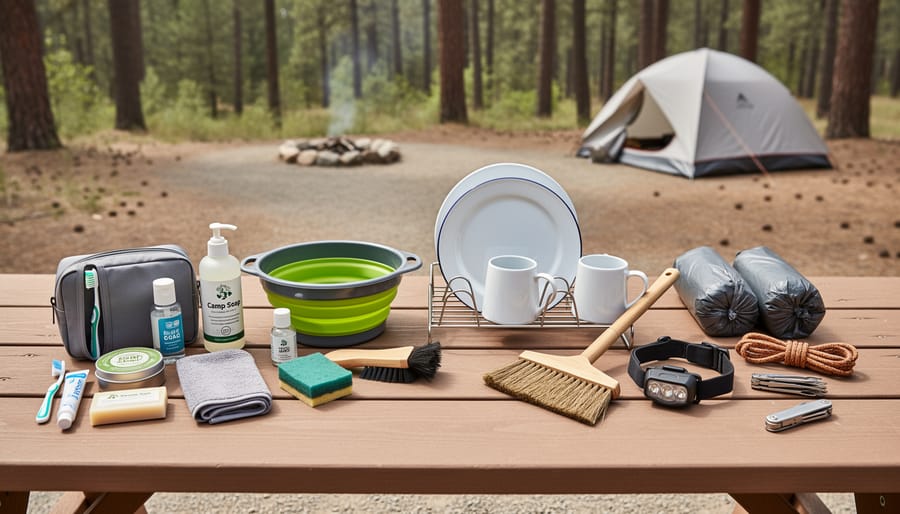
Keeping yourself fresh in the woods starts with a handful of small, simple items. Pack a bar or bottle of biodegradable, unscented soap, since strong fragrances can attract bugs and curious critters, and gentler formulas are kinder to local streams. Add a pack of unscented body wipes for quick freshen-ups when water is scarce.
Next, build a tiny toothbrush kit: brush, toothpaste, and a small cup. A lightweight trowel is a must for digging a cat hole at least 200 feet from water, camp, and trails. Finally, bring a collapsible wash basin so you can scrub up well away from lakes and streams instead of rinsing right at the shoreline.
Not sure what else belongs in your bag? Our camping gear checklist covers the rest of the basics.
Dish and Campsite Cleanup Gear
A good dish setup starts with a collapsible wash tub. It packs flat, and two of them let you wash in one and rinse in the other. Add a small mesh strainer to catch food bits, so scraps go in the trash and never into the dirt. A scrub sponge, a bottle of biodegradable dish soap, and a quick-dry towel round out the kitchen side.
For the rest of camp, bring sturdy trash bags plus a separate bag for recyclables. Double-bagging keeps smells in and curious critters out. A mini broom or hand brush makes quick work of dirt and pine needles in the tent and around the picnic table.
On a budget? Skip the specialty gear. A plastic dishpan from home works as a wash tub, and a spare colander does the strainer’s job. An old dustpan and brush set cleans the tent floor just fine. Pack it all in one bin so it’s ready for every trip.
Clean Camping Safety: Protect Yourself, Wildlife, and Water
Staying clean outdoors is about more than feeling fresh. It protects you, the wildlife around you, and the water that makes Chesterfield’s woods so special. The good news is that a few easy habits cover almost everything.
Start with smell. Food odors, greasy dishes, toothpaste, and soap all draw curious critters, from raccoons to bears. Keep food, trash, and scented items sealed up and out of your tent, and stash them in a hard-sided vehicle or a proper food storage box when you’re not using them. A quick wipe of the picnic table after meals goes a long way, too.
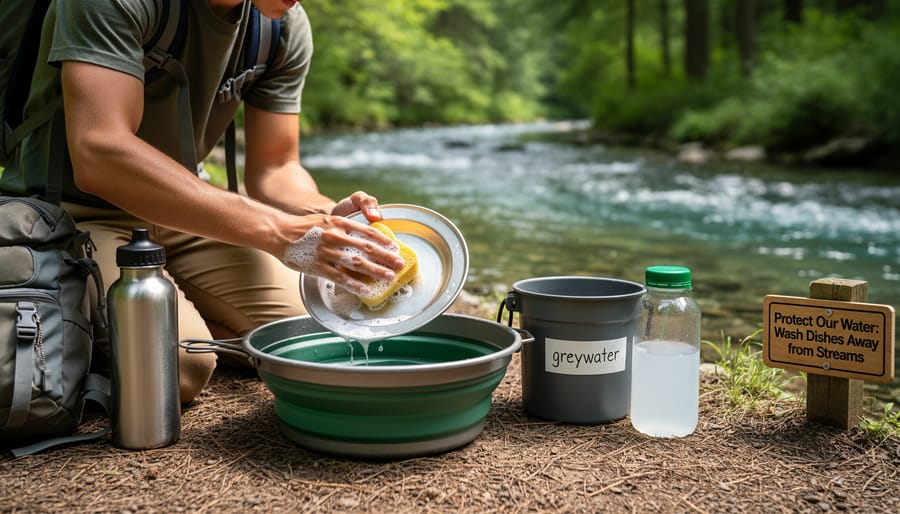
Next, think about your dishwater. Strain out food bits and pack them out with your trash, then scatter the leftover water broadly on the ground well away from water sources. Even biodegradable soap needs soil to break down, so never pour it straight into a stream.
Don’t forget your hands. Stomach bugs love camp kitchens, so wash up with soap and water (or a good sanitizer when water’s scarce) before cooking and eating, and after trips to the bathroom or trash area.
Know when to pause and rethink. If a water source looks cloudy, smells off, or shows signs of contamination, skip it and find another. If wildlife wanders toward camp, calmly back away, secure your food, and give the animal plenty of space. Nothing is worth a risky shortcut.
Your Step-by-Step Camp Cleaning Routine
Setting Up a Clean Camp from the Start
Before you unpack a single thing, take five minutes to walk your site and plan it out. Pick a spot for your tent on level, well-drained ground, away from low dips where rain pools and mud follows. A little slope-reading now saves you from a soggy sleeping bag later.
Next, carve out a gear zone near the tent door. A cheap tarp or an old doormat works great here. Muddy boots, wet jackets, and packs live on that mat, not inside the tent. Make “shoes off at the door” the family rule and you’ll cut your sweeping in half.
Then give every activity its own corner. Keep cooking and eating well away from where you sleep, since food smells attract curious critters. Set your trash and recycling bags in a sealed spot downwind of camp. When each job has a home, messes stay put instead of spreading across the whole site.
Staying Fresh: Washing Up Without a Shower
You don’t need a shower to feel human again. Start with your hands: a dab of biodegradable soap, a splash of water, and a good twenty-second scrub before every meal and after every bathroom stop. It’s the single best way to dodge stomach bugs.
For a quick sponge bath, fill your collapsible basin with a little warm water and use a washcloth on the spots that matter most: face, neck, underarms, and feet. A few minutes does wonders. Brush your teeth with a small dab of paste, then spit it into a shallow hole well away from camp rather than into the nearest stream.
Hair can be tamed with a dry shampoo or a tucked-away bandana. Feet deserve extra love, so rinse them, dry them thoroughly, and put on clean, dry socks each evening. Your toes will thank you.
Wash water matters too. Carry it at least 200 feet from lakes, streams, and your campsite, strain out any food bits, and scatter the water widely so the soil can filter it. This is the heart of earth-friendly camping and it keeps Chesterfield’s waters sparkling for everyone who visits next.
Keeping the Kitchen and Campsite Tidy
After a good camp meal, the cleanup is what separates a tidy site from a messy one. Start with the three-bin dish system: one tub for a hot, soapy wash, one for a clear rinse, and a strainer or mesh bag to catch food bits. Scrape plates into the trash first, since greasy scraps make dishwater harder to deal with and attract critters. Wash the least greasy items first, and let everything air dry on a clean towel or a mesh dish rack.
Wipe down the picnic table before and after every meal with a damp cloth and a little biodegradable soap. Crumbs and sticky spills are an open invitation to ants, mice, and raccoons. Toss that wiping cloth in a sealed bag, not on the table bench.
Food scraps need a plan too. Pack everything out, including peels and leftovers, because even “natural” scraps can change wildlife habits and linger long after you leave. Following the Leave No Trace principles keeps this simple and respectful of the places we love.
Before bed, do a quick nightly trash check. Tie off your bags, stash them in your vehicle or a designated bear-safe spot, and glance around for stray wrappers or forgotten snacks. Two minutes of tidying means you wake up to a peaceful, critter-free campsite.
Insider Tips from Chesterfield Locals
Ask a few seasoned Chesterfield campers how they keep things tidy, and the same habits come up again and again. Mud season is the big one. Spring trails around here turn soft and soupy, so locals set up a “boot zone” right outside the tent flap with a flat rock or an old doormat and a stiff brush. Scrape the worst of it off before you step inside, and your sleeping bag will thank you.
Morning dew is the other sneaky mess. Instead of stuffing damp gear into a bag, hang towels and rain jackets on a line in the sun, and wipe down your tent floor with a cloth before you pack up. Dry gear stays fresh, and fresh gear keeps you feeling clean.
Many locals also keep one dedicated bin for muddy, wet items so the grime never spreads to the rest of camp. And when the last bag is zipped, they make sure to pack out properly leaving nothing behind but footprints.
Running low on supplies? Keep an eye out for local community events like a farmers’ market or craft fair, which are great places to find eco-friendly soaps and handmade camp goods from neighbors.
Check Your Work: Verify a Clean Campsite and Plan Your Next Trip
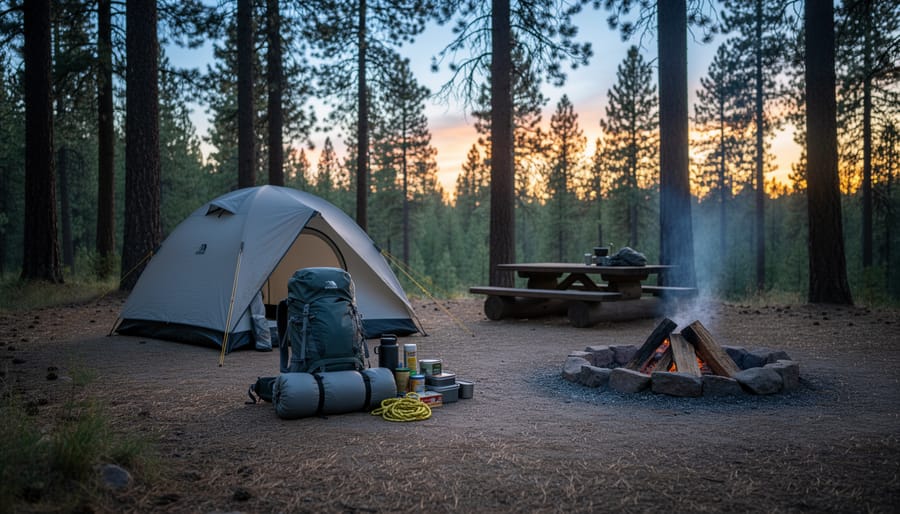
You’ve packed up, but you’re not quite done. Before you load the car, take five minutes for a slow lap around your site, the way you’d check a hotel room for a forgotten phone charger. Walk it at ground level, because the little stuff hides there: a bottle cap in the pine needles, a twist tie by the picnic table. Here’s what to check:
- The fire ring is cold to the touch and free of leftover trash.
- No food scraps or micro-trash remain, even tiny bits of foil or wrapper.
- Dishwater has been strained and scattered well away from water sources.
- Your gear zone is fully cleared, with nothing left behind.
- The tent area is swept, with stakes pulled and holes smoothed over.
- The site looks as you found it, or a little better.
Once you’re home, the job isn’t over yet. Air out the tent and tarp right away, since damp fabric turns musty fast, and give boots and cookware a proper scrub. Then restock your cleanliness kit while you remember what you ran low on, so it’s ready for the next trip. Pull out the calendar while you’re at it and pencil in your next outing. Keeping campsites clean is a shared promise, and every careful camper makes the next visit in Chesterfield’s woods that much better.
Camping Cleanliness FAQs
Got a few lingering questions? You’re not alone, and the answers are simpler than you’d think.
How do I stay clean without running water?
Pack a small wash basin, biodegradable soap, and a few unscented wipes for a quick sponge bath. Focus on the spots that matter most, like hands, face, armpits, and feet, and you’ll feel surprisingly fresh.
What should I do with dishwater and greywater?
Strain out food bits and pack them out with your trash. Then scatter the leftover water broadly, at least 200 feet (about 70 big steps) from any stream or lake, so it can filter through the soil.
How do I keep odors and mud out of my tent?
Leave muddy boots in a gear zone or vestibule, and keep food, trash, and toiletries stored away from your sleeping area. A quick shake of the mats and a swipe with a hand brush each morning goes a long way.
How do I keep kids clean and comfortable?
Turn cleanup into a game, like a “hand-washing race” before every meal. Keep a spare set of dry clothes and socks handy, and bring a few wipes for sticky faces and muddy knees.
And if your campground has no restrooms, don’t sweat it. Bring a trowel, dig a hole six to eight inches deep well away from water, trails, and camp, and pack out your toilet paper in a sealed bag. A little planning keeps you comfortable and keeps the woods beautiful for the next camper.
Staying clean while camping really does come down to three simple things: a small kit you actually remember to pack, an easy routine you repeat each day, and real respect for the land under your boots. Nothing fancy, no giant gear haul required.
Once those habits click, something nice happens. You spend less time fussing over mud and dishes and more time watching the morning mist lift off the water or swapping stories around the fire. A tidy camp is a happier camp.
So grab your biodegradable soap, load up the trash bag, and head out to Chesterfield’s campsites. Enjoy every muddy, marshmallow-scented moment, and when it’s time to pack up, leave the place even cleaner than you found it. The next campers will thank you.