
Jaguars follow distinct seasonal patterns tied to prey availability and water distribution, with peak activity during the wet season (roughly November through April in most of their range) when prey congregates near flooded riverbanks and the big cats hunt more frequently during dawn and dusk. Temperature and rainfall shifts drive these behavioral changes more than anything else, pushing jaguars to adjust their territories, hunting times, and even their choice of prey as the landscape transforms around them.
You won’t find jaguars in Chesterfield, but understanding how these apex predators respond to seasonal cues offers valuable lessons for anyone fascinated by wildlife behavior and the rhythms that govern animal life. These solitary cats operate on a survival schedule governed by when deer, capybaras, and caimans are easiest to catch, making their behavior less mysterious and more predictable once you understand the environmental triggers.
Unlike many big cats that rely on speed and open terrain, jaguars are opportunistic ambush hunters that thrive in dense jungle and wetland habitats. Their seasonal movements mirror water cycles because water draws prey, and prey draws jaguars. During dry months, territories shrink around permanent water sources. When rains return, territories expand and overlap increases, sometimes sparking territorial disputes.
This pattern holds true across their range from Mexico to Argentina, though the exact timing shifts based on local climate. What remains constant is the jaguar’s remarkable adaptability, switching hunting grounds, prey types, and even daily activity windows to match whatever the season delivers. That flexibility has kept them at the top of the food chain for thousands of years.
Quick Answer: Jaguar Activity Through the Seasons
Jaguars are primarily crepuscular and nocturnal hunters, most active during dawn and dusk hours year-round. Their peak activity windows shift with seasonal changes in prey behavior and water availability. During the dry season (roughly December through April in most regions), jaguars concentrate their movements near permanent water sources where prey animals gather, making this period ideal for tracking their territorial signs. The wet season (May through November) sees jaguars expanding their range as flooding disperses prey across wider territories and creates new hunting grounds in flooded forests.
Breeding behavior intensifies from late fall into winter, when males vocalize more frequently and roam farther to locate mates. You’ll notice the most dramatic behavioral shifts at the transitions between dry and wet seasons, when changing water levels force both jaguars and their prey to adjust territories rapidly. Understanding these patterns helps outdoor enthusiasts recognize jaguar signs and time their activities to minimize unexpected encounters while maximizing opportunities to appreciate these apex predators from a respectful distance.
Understanding Jaguar Behavior: Key Terms and Concepts
Before diving into when jaguars hunt and roam throughout the year, you’ll need to understand the language wildlife biologists use to describe these powerful cats. Jaguars don’t follow simple schedules, and their behavior responds to environmental conditions in ways that specific terms help explain. Learning these concepts will make the seasonal patterns clearer and help you interpret what you observe or read about jaguar activity in the wild.
- Crepuscular Activity
- The pattern of being most active during twilight hours at dawn and dusk. Jaguars typically hunt during these low-light periods when their exceptional night vision gives them an advantage over prey.
- Home Range
- The area a jaguar regularly travels through while hunting, mating, and resting. A male’s home range often overlaps with several females’ territories and can span 20 to 100 square miles depending on prey availability.
- Territorial Marking
- Behaviors jaguars use to claim and defend their space, including scent-marking with urine, scratching trees, and leaving scat in visible locations. These markers communicate presence to other jaguars and help prevent conflicts.
- Prey Density
- The concentration of available prey animals within a given area. Higher prey density allows jaguars to maintain smaller territories, while scarce prey forces them to roam more widely.
- Seasonal Migration Triggers
- Environmental changes like rainfall patterns, water level fluctuations, and prey movements that cause jaguars to shift their territories or activity areas throughout the year. These triggers vary significantly by region and habitat type.
These terms form the foundation for understanding the seasonal behavior patterns we’ll explore next. A jaguar’s home range might shrink during the dry season when prey density increases near limited water sources, while territorial marking becomes more frequent during mating season as males expand their movements. The interplay between these behavioral concepts creates the annual rhythm that shapes when and where jaguars are active, making each season distinct in the life of these solitary hunters.
Jaguar Activity Windows Throughout the Year
Dry Season Behavior (Winter Through Early Spring)
During the dry season, roughly December through March in most jaguar habitats, these powerful cats shift into what wildlife researchers call “water-focused hunting mode.” As streams shrink and wetlands recede, prey animals cluster around the remaining water sources, and jaguars adjust their territories accordingly.
You’ll find jaguars concentrating their activity along riverbanks, oxbow lakes, and permanent water holes during these months. Instead of roaming widely across their home range, they stake out these critical zones where capybaras, peccaries, and deer must drink. This concentrated prey density means jaguars can hunt more efficiently, often reducing their daily travel distance by up to 40% compared to wet season patterns.
Their hunting schedule intensifies during early morning and dusk, when prey animals are most active at water sources and temperatures are cooler. Midday heat drives jaguars to rest in riverside vegetation, but they remain alert, a thirsty peccary can trigger an ambush even during siesta hours.
Track evidence becomes easier to spot during dry months. Look for distinctive paw prints in dried mud around shrinking pools, and scratch marks on trees near water corridors where jaguars mark territorial boundaries more frequently. This seasonal behavior creates predictable patterns that both prey and careful observers can recognize, making the dry season an especially revealing window into jaguar ecology.
Wet Season Patterns (Late Spring Through Summer)
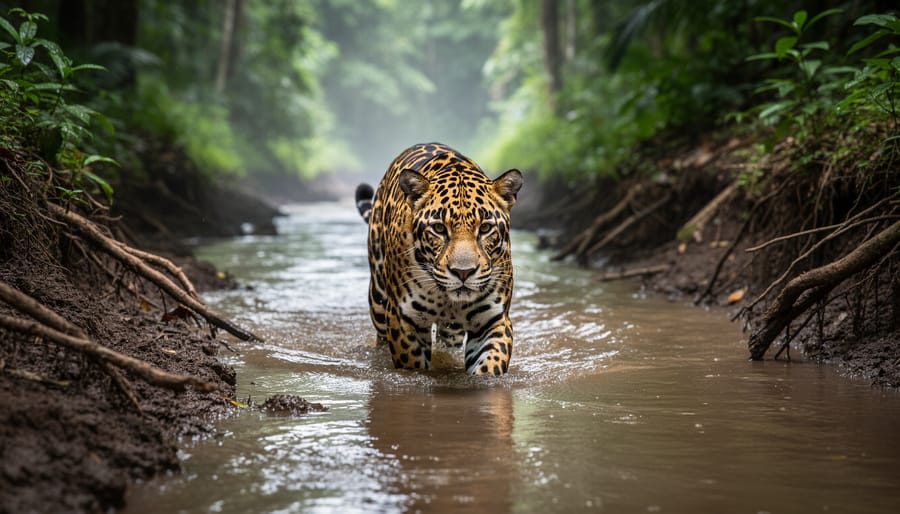
When heavy rains arrive in late spring and continue through summer, jaguars face a landscape transformed by water. Rivers swell beyond their banks, floodplains become temporary lakes, and the concentrated prey clusters found near dry-season water sources scatter across the newly accessible wetlands. This dispersal forces jaguars to expand their hunting territories significantly, sometimes roaming 50% farther than their dry-season ranges to locate prey that’s now spread thin across flooded forests and grasslands.
The wet season brings a remarkable behavioral adaptation: jaguars take to trees to escape rising floodwaters and hunt from elevated perches. These powerful cats, already excellent climbers, spend considerably more time in the canopy during flood months, ambushing prey from branches and resting on platforms above the water. They’ll swim between forest patches more frequently too, covering distances that would surprise anyone who thinks of big cats as water-averse.
Hunting efficiency typically drops during this period because tracking becomes harder on waterlogged ground and prey can hear approaching predators more easily in the soggy undergrowth. Jaguars compensate by switching their focus to species that thrive in wet conditions, particularly capybaras and caimans near water’s edge, and they adjust their activity patterns to hunt during brief dry spells or cooler evening hours when prey movement becomes more predictable.
Mating Season Activity (Late Fall Through Winter)
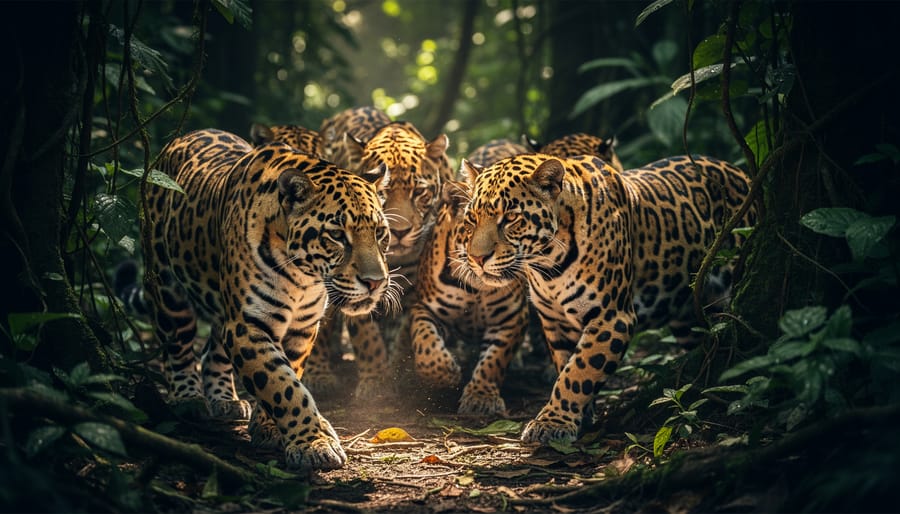
During late fall and winter, jaguars shift into breeding mode, and their behavior becomes noticeably more dramatic. Males expand their territories significantly, sometimes doubling their usual range, as they search for receptive females. This roaming intensifies competition among males, occasionally leading to confrontations that outdoor enthusiasts might detect through claw marks on trees or disturbed vegetation along territorial boundaries.
Vocalization increases sharply during this period. The jaguar’s signature roar, called a “saw” because of its repetitive rasping quality, echoes through forests and wetlands more frequently. Males vocalize to advertise their presence to potential mates and warn rivals to keep their distance. These calls carry up to two miles in quiet conditions, particularly during early morning and evening hours when activity peaks.
Female jaguars signal receptivity through scent marking and vocalizations, drawing males into their core territories. When a male and female connect, they spend several days together, mating repeatedly before the male moves on to continue his search. Females show little tolerance for males outside this brief window.
Outdoor adventurers exploring during this season should expect heightened jaguar activity along water corridors and forest edges. Fresh tracks, scratch marks at shoulder height on prominent trees, and distinctive musky scent markers appear more frequently. The increased movement and vocalization make this period particularly important for wildlife observers to maintain respectful distances and avoid disrupting these crucial reproductive behaviors.
Daily Activity Cycles Within Each Season
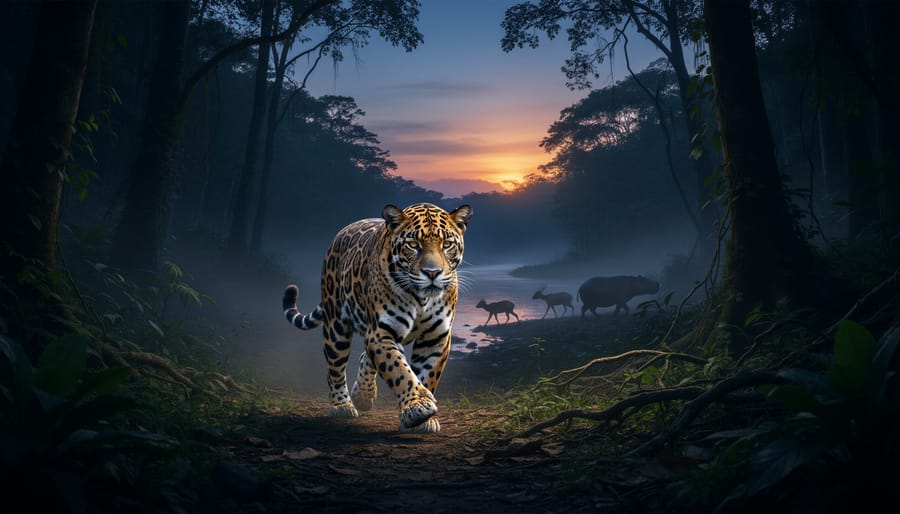
Jaguars don’t follow a strict nine-to-five schedule, but their daily rhythms do shift with the seasons in predictable ways. During dry months, when temperatures soar midday, jaguars concentrate their hunting during the cooler hours at dawn and dusk, a pattern biologists call crepuscular behavior. Research shows activity curves peak at dusk when prey animals emerge to drink and graze. As darkness settles, jaguars remain active well into the night, stalking river edges and forest trails with remarkable stealth.
The wet season brings a subtle change. With afternoon rains cooling the landscape and dense cloud cover moderating temperatures, jaguars sometimes extend their activity into late morning or early afternoon, especially when tracking prey through flooded areas. They’re still most active during twilight hours, but you’ll find them less rigidly tied to the dusk-to-dawn window.
During mating season, males break their usual patterns entirely. They’ll roam and vocalize at all hours, including broad daylight, as they search for receptive females and defend territory from rivals. These seasonal overlays matter if you’re hiking jaguar country: your chances of encountering fresh tracks or hearing their distinctive sawing calls increase dramatically during those dawn and dusk windows, regardless of season. Midday? That’s when jaguars are typically resting in dense cover, conserving energy for the next hunt.
What Influences Jaguar Seasonal Patterns
Prey Availability and Migration
Jaguars are opportunistic hunters whose territories and activity patterns follow their food supply. When peccaries migrate through lowland forests during the dry season, jaguars adjust their ranges to intercept these movements, sometimes traveling 15-20 miles to reach areas where herds congregate. Capybaras, which gather near permanent water sources during drier months, become predictable targets that anchor jaguar activity to riverbanks and wetland edges.
During the wet season, prey disperses across expanded habitats as temporary water sources flood the landscape. This forces jaguars to patrol larger territories and switch between prey species more frequently. A jaguar that focuses on deer in January might shift to caimans and fish in June when flooded forests make terrestrial hunting less efficient.
White-lipped peccary migrations particularly influence jaguar movements, when these large herds pass through an area, multiple jaguars may temporarily concentrate their activity along the same corridors. This prey-driven flexibility explains why jaguars don’t maintain rigidly fixed territories year-round. They’re constantly reading the landscape, following abundance rather than defending boundaries when food sources shift seasonally.
Water Source Distribution
Water sources act as magnets for jaguars year-round, but their influence shifts dramatically with the seasons. During dry months, shrinking rivers and isolated water holes force prey animals into predictable patterns, they must drink, which concentrates deer, peccaries, and capybaras around remaining pools. Jaguars respond by patrolling these zones intensively, sometimes spending days near a single productive water source rather than roaming their full territory.
When rains arrive and water spreads across the landscape, the dynamic flips. Flooded wetlands and overflowing streams scatter both prey and predators across a wider area. Jaguars expand their movements, following prey into seasonally accessible habitats like gallery forests and floodplains that become hunting grounds only during wet periods. In the Pantanal, jaguars are famous for prowling riverbanks during floods, ambushing capybaras and caimans at water’s edge.
This water-driven behavior explains why jaguar sightings cluster near rivers and lagoons during certain months. Understanding which water sources matter in each season helps you anticipate where these cats concentrate their activity, knowledge that shapes both wildlife observation and backcountry travel decisions.
Temperature and Climate Conditions
Jaguars are remarkably adaptable to temperature shifts, but extreme heat forces them to adjust their schedules. During scorching midday hours in the dry season, jaguars retreat to shaded riverbanks or dense forest cover, shifting their hunting to cooler dawn and dusk windows when prey animals also emerge to drink and feed.
Rainfall dramatically reshapes jaguar behavior. Heavy wet-season storms trigger increased nocturnal activity, jaguars hunt more successfully under cover of rain when their exceptional night vision gives them an advantage over prey whose senses are dulled by downpours. Persistent flooding, however, can force jaguars to higher ground, compressing their hunting territories and sometimes pushing multiple cats into overlapping ranges.
Humidity affects hunting efficiency in subtle ways. High humidity carries scent farther, helping jaguars track prey but also making them more detectable. In muggy conditions, jaguars often hunt closer to water where they can cool off between stalking attempts. During prolonged droughts, dropping humidity coincides with concentrated prey around shrinking water sources, creating predictable ambush opportunities that jaguars exploit with patient efficiency.
Human Activity and Habitat Pressure
Jaguars adjust their behavior throughout the year in direct response to changing levels of human activity in their territories. During peak tourist seasons in popular jungle destinations, jaguars often shift their movement patterns to more remote areas or become strictly nocturnal to avoid contact. You’ll notice this adaptation most clearly in protected areas where visitor numbers spike during dry months when trails are accessible.
Agricultural cycles create predictable pressure points. Harvest seasons bring increased human presence to forest edges, prompting jaguars to temporarily relocate deeper into wilderness corridors or adjust their hunting routes around active farmland. In regions where cattle ranching intensifies seasonally, jaguars may change their prey preferences or expand their territories to maintain adequate hunting grounds away from livestock areas.
Logging operations pose one of the most disruptive seasonal pressures. Wet season logging restrictions in many areas provide jaguars with quieter periods to establish dens and rear cubs. When operations resume during dry months, these big cats frequently abandon traditional pathways and shift to secondary forest corridors, sometimes bringing them into closer proximity to human settlements as they navigate around industrial activity zones.
Human disturbance patterns effectively reshape jaguar seasonal rhythms beyond their natural environmental triggers.
What This Means for Outdoor Enthusiasts
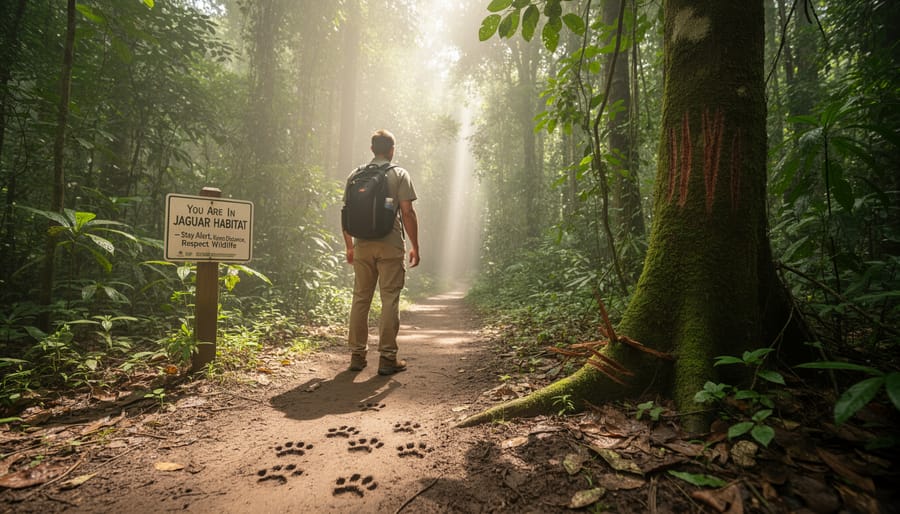
Understanding jaguar behavior isn’t just about appreciating wildlife, it’s about making smarter decisions when you’re exploring remote backcountry where these powerful cats live. If you’re hiking, camping, or photographing nature in Central or South American regions known for jaguar populations, knowing their seasonal patterns helps you minimize surprise encounters while maximizing your chances of spotting signs of their presence from a respectful distance.
The good news: jaguars typically avoid humans and attacks are extraordinarily rare. Still, you should stay alert during their most active hours, dawn and dusk, especially during the dry season when both wildlife and people concentrate near limited water sources. When planning multi-day treks, schedule your camp setup and meal preparation during daylight hours rather than at twilight when jaguars begin their evening hunts.
Keep your group together and make noise while hiking through dense vegetation where visibility is limited. Jaguars rely on stealth and ambush tactics, so letting them know you’re coming gives them the opportunity to move away before you get close. If you discover fresh tracks, scat, or claw marks on trees, observe and photograph from where you are but don’t follow the trail, the cat may be nearby.
Conservation-minded adventurers can contribute valuable data through GPS wildlife tracking programs and citizen science apps that record jaguar sign locations. Your documented sightings help researchers understand seasonal movement patterns and identify critical habitat corridors. Carry a camera with a decent zoom lens rather than approaching for close-ups, and never attempt to feed or attract jaguars with calls or bait. Respecting their space and cycles keeps both you and these magnificent predators safe.
After Observing Jaguar Signs: What to Do Next
When you discover jaguar tracks, scat, scratch marks, or other signs of activity during your outdoor adventures, your observations can contribute valuable data to wildlife conservation efforts. Here’s how to make the most of your encounter while respecting these apex predators.
First, document what you’ve found without disturbing the area. Take clear photos from multiple angles, capturing the full track or sign along with identifiable landmarks in the background. Note the GPS coordinates, date, time, and specific habitat details like proximity to water, vegetation type, and elevation. If you encounter scat, photograph it but don’t touch it, it may contain prey remains that scientists can analyze to understand local jaguar diets.
Report your sighting to regional conservation organizations working in that area. Groups like Panthera, local wildlife departments, and research institutions maintain databases that track jaguar populations and movements. Your observation helps scientists map territories, identify corridors, and make informed conservation decisions. Many organizations have online reporting portals or mobile apps specifically designed for citizen science contributions.
Take time to learn what your sighting reveals about the individual jaguar. Fresh scratch marks on trees indicate recent territorial marking. Track depth and clarity suggest how recently the animal passed through. Scat contents reveal prey preferences in that location during that season. This detective work deepens your understanding of jaguar ecology.
Continue building your knowledge through field guides, conservation organization newsletters, and local naturalist groups. Consider supporting jaguar conservation financially or through volunteer opportunities. Each responsible observation strengthens the connection between outdoor enthusiasts and the protection of these magnificent predators across their range.
What Changes the Timing
Jaguar activity patterns aren’t universal across their range. Geography plays a huge role, jaguars in the Brazilian Pantanal follow different seasonal rhythms than those in Central American rainforests or Mexico’s Sonoran Desert. Pantanal jaguars concentrate near shrinking water sources during the dry season, while Amazon jaguars maintain more stable territories year-round due to consistent rainfall.
Regional climate variations shift when breeding peaks occur. Northern populations may mate earlier in winter, while equatorial jaguars show less pronounced seasonal breeding windows. Elevation also matters, highland jaguars face cooler temperatures that affect prey availability differently than lowland populations.
Individual jaguar condition influences activity too. A well-fed cat may rest more during midday heat, while a hungry jaguar pushes through uncomfortable temperatures to hunt. Prey density in a specific territory determines whether a jaguar needs to expand its range or can stay concentrated in a smaller area.
If you’re learning jaguar sign identification or hoping to spot wild animals in jaguar country, understanding these regional differences matters. Wildlife tracking skills and even wildlife tracking certification courses teach you to read local conditions rather than rely on generalized timelines.
Steps at a Glance
Understanding jaguar seasonal behavior becomes actionable when you follow a systematic approach to observation and safety. Whether you’re planning a wildlife expedition or simply want to be aware while hiking in jaguar territory, these steps will help you navigate their world responsibly.
- Research the specific region and season before your trip, jaguar activity patterns vary significantly between Pantanal wetlands, Amazon rainforest, and Central American cloud forests
- Time your outdoor activities for mid-morning or early afternoon when jaguars are least active, avoiding dawn and dusk hours in known jaguar territory
- Learn to recognize fresh jaguar signs including tracks (large, round paw prints without claw marks), scat, scratch marks on trees, and territorial spray markers
- Carry a camera with good low-light capability and practice nature photography tips that let you document signs from a safe distance without disturbing the environment
- Document any jaguar activity with GPS coordinates, date, time, and photos, then report sightings to local conservation organizations within 24 hours
- Maintain awareness of seasonal shifts, dry season concentrations near water require extra vigilance, while wet season dispersal patterns affect where you might encounter signs
These steps transform theoretical knowledge into practical awareness, helping you appreciate jaguar behavior while maintaining the respectful distance these apex predators deserve. Your documented observations contribute valuable data to ongoing conservation efforts.
Common Questions About Jaguar Seasonal Behavior
Jaguars inspire curiosity and plenty of questions, especially when you’re planning outdoor adventures in regions where these magnificent cats roam. Whether you’re hiking through Central American rainforests or exploring South American wetlands, understanding jaguar behavior helps you appreciate their patterns while staying safe.
Do jaguars hibernate during any season?
No, jaguars remain active year-round and do not hibernate. Unlike bears or other mammals that enter dormancy, jaguars adjust their hunting patterns and movement based on prey availability and weather conditions, but they continue hunting and patrolling their territories through all seasons.
What time of day are jaguars most active?
Jaguars are primarily crepuscular and nocturnal, meaning they’re most active during dawn, dusk, and nighttime hours. However, during cooler wet season months or in areas with less human disturbance, they may hunt during daylight hours as well.
How does heavy rain affect jaguar activity?
Heavy rainfall typically reduces jaguar activity temporarily, as they seek shelter and wait out intense storms. However, light to moderate rain doesn’t significantly slow them down, and they often resume hunting shortly after downpours when prey animals emerge to feed.
What signs indicate recent jaguar activity in an area?
Look for large paw prints (3-4 inches wide), scratch marks on trees at shoulder height, scat containing fur and bone fragments, and claw-marked logs used for territorial marking. Fresh tracks in mud or sand, especially near water sources, signal recent jaguar presence in the immediate area.
Understanding these patterns helps you interpret what you see in the field. If you spot fresh tracks during a morning hike, you know a jaguar was likely active within the previous 12 hours, given their nocturnal tendencies. Similarly, finding territorial scratch marks on trees tells you you’re in an active home range, even if you never see the cat itself.
The seasonal context matters too. That same track during the dry season near a shrinking water hole carries different meaning than one found during the wet season when water is abundant everywhere. During mating season, vocalizations like low roars or growls become more common, though jaguars are generally silent hunters compared to other big cats.
These behavioral clues transform a simple trail into a story about jaguar life cycles, helping you connect more deeply with the ecosystems you explore while respecting the space these powerful predators need to thrive.
Understanding when jaguars hunt and roam transforms how you experience the outdoors. These seasonal patterns aren’t just fascinating wildlife facts, they’re practical knowledge that helps you adventure more safely and respectfully in regions where jaguars live.
When you know that jaguars concentrate near water sources during dry months or expand their territories during mating season, you’re better equipped to plan your explorations. You’ll recognize the signs of their presence, understand why certain trails feel quieter at specific times, and appreciate the rhythms that have shaped these landscapes for thousands of years.
This knowledge deepens every outdoor experience. Whether you’re hiking in Central American reserves, photographing wildlife in the Pantanal, or simply learning about these remarkable predators from afar, you’re now part of the larger story of jaguar conservation. Share what you’ve learned with fellow adventurers, report your observations to local conservation groups, and keep exploring with curiosity and respect.
The wild places where jaguars thrive need advocates who understand them. You’re now one of those advocates. Get out there, stay aware, and let your adventures contribute to a future where jaguars continue roaming freely through their ancient territories.