
Witness nature’s most spectacular light show as the Northern Lights dance across Arctic skies, rivaling the majesty of the Seven Ancient Wonders. While the Pyramids of Giza and Hanging Gardens of Babylon stood as testaments to human achievement, the Aurora Borealis reminds us that Earth’s most magnificent wonders are born from the cosmos itself. This ethereal phenomenon, caused by solar particles colliding with our atmosphere, transforms the night sky into a living canvas of green, purple, and red ribbons that have captivated humans for millennia.
From Iceland’s volcanic landscapes to Norway’s fjords, the Northern Lights beckon adventurers to Earth’s most remote corners between September and March. Unlike static monuments, this celestial wonder demands patience, perfect timing, and a dash of luck. The reward? Witnessing a display so magnificent it earned its place among modern natural wonders, alongside the Grand Canyon and Great Barrier Reef.
Whether you’re chasing the lights from a glass igloo in Finnish Lapland or standing beneath Alaska’s star-studded sky, experiencing the Aurora Borealis isn’t just viewing a natural phenomenon – it’s connecting with an ancient wonder that has inspired myths, legends, and scientific pursuit across generations.
When Magic Fills the Arctic Sky
The Science Behind the Spectacle
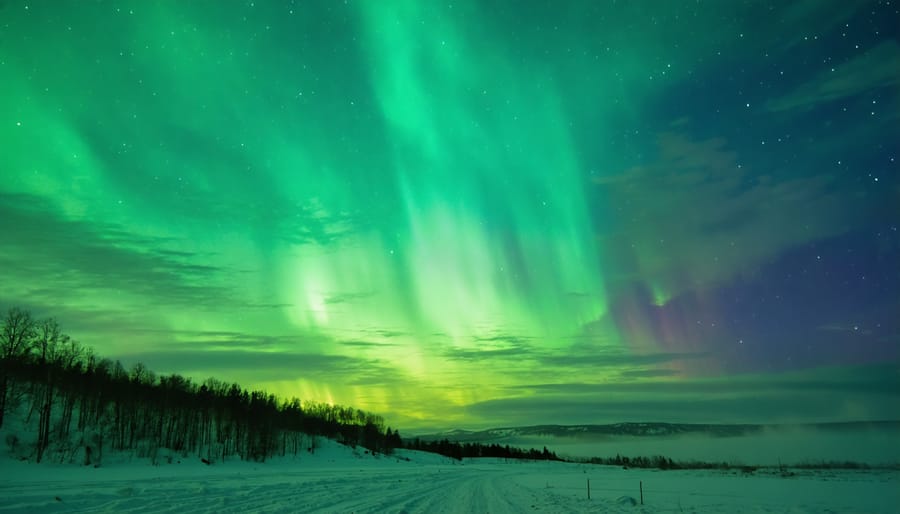
The magic of the Northern Lights begins with our Sun, which regularly sends bursts of charged particles into space through solar winds. When these particles collide with Earth’s magnetic field and atmosphere, they create a dazzling light show that has captivated humans for millennia.
Think of it like a cosmic dance: as these solar particles meet gases in our atmosphere – mainly oxygen and nitrogen – they become excited and release energy in the form of light. The different colors we see depend on which gases are involved and how high up the reaction occurs. Green lights, the most common, come from oxygen atoms about 60 miles up, while rare red auroras happen at even higher altitudes.
Earth’s magnetic field acts like a protective shield, directing these particles toward the poles. That’s why the Northern Lights are typically visible in the “aurora zone” – a ring-like area around the Arctic Circle. While the science behind this phenomenon is complex, the result is simple: one of nature’s most magnificent displays, painting the night sky with ethereal colors and patterns.
Prime Viewing Seasons
The Northern Lights put on their most spectacular shows during the darker months of the year, typically from late September through March. To maximize your chances of witnessing this magical display, plan your adventure during these peak viewing months when the nights are longest. The best times to see aurora are during the equinoxes in September and March, when geomagnetic activity tends to be more intense.
Clear, crisp winter nights offer the most dramatic viewing conditions, especially between 10 PM and 2 AM when the sky is at its darkest. Look for nights with minimal cloud cover and low moon illumination for the best visibility. Solar activity also plays a crucial role – during solar maximum periods, which occur roughly every 11 years, aurora displays become more frequent and vibrant.
Remember that patience is key – while the lights might appear quickly on some nights, other times you might need to wait several hours. Dress warmly, bring hot beverages, and make yourself comfortable for an unforgettable night of stargazing and aurora hunting.
Top Aurora Viewing Destinations
Iceland’s Crystal Nights
Iceland’s pristine landscapes provide an unmatched backdrop for witnessing the northern lights, with viewing opportunities possible from September through March. The country’s strategic location near the Arctic Circle makes it one of the world’s premier destinations for aurora hunting. Reykjavik, the world’s northernmost capital, offers convenient base camps for nighttime adventures, with tours departing regularly during peak season.
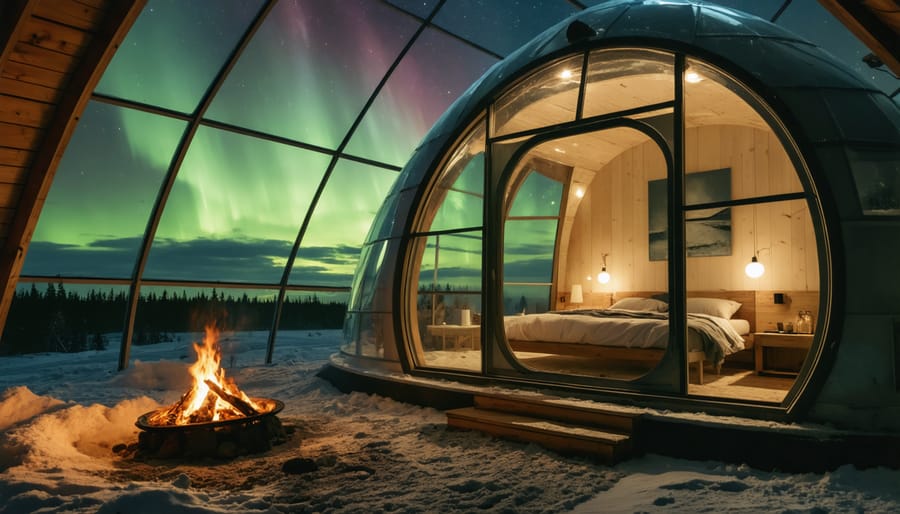
The Thingvellir National Park, just an hour from the capital, presents vast open skies perfect for light shows, while the remote Snaefellsnes Peninsula offers more secluded viewing spots away from city lights. For an truly magical experience, consider staying in one of Iceland’s glass-roofed igloos or bubble hotels, where you can watch the dancing lights from the comfort of your bed.
Local experts recommend visiting during the new moon phase when skies are darkest, and checking the aurora forecast before planning your excursion. The small village of Vik, with its black sand beaches, provides a dramatic foreground as green and purple auroras illuminate the night sky, creating unforgettable photo opportunities for nature enthusiasts.
Norway’s Arctic Paradise
Norway’s Arctic paradise offers some of the world’s most spectacular northern lights viewing opportunities. The Tromsø region, nicknamed the “Gateway to the Arctic,” serves as an ideal base for aurora hunters between September and March. Here, you can chase the lights while dog sledding through snow-covered forests or sailing along dramatic fjords on a traditional Norwegian vessel.
For an unforgettable experience, visit the Lofoten Islands, where the dancing lights reflect off pristine Arctic waters and illuminate jagged mountain peaks. Stay in a traditional fisherman’s cabin (rorbu) for an authentic Norwegian experience while waiting for the lights to appear. The Svalbard archipelago, despite its remote location, rewards visitors with unparalleled viewing opportunities during the polar night period when darkness prevails for several months.
Beyond aurora viewing, visitors can enjoy snowmobiling excursions, reindeer sledding with Sami guides, or relaxing in glass-roofed igloos while waiting for the light show to begin. Local towns offer cozy cafes serving warming Norwegian specialties and expert-led photography workshops to help capture the perfect aurora shot.
Finnish Lapland’s Light Show
Finnish Lapland offers some of the most enchanting Northern Lights viewing experiences in the world. The region’s pristine wilderness and innovative accommodation options create unforgettable aurora-watching opportunities. From the comfort of glass igloos in Kakslauttanen to the cozy wilderness cabins near Rovaniemi, visitors can witness nature’s light show while staying warm and comfortable.
The small village of Saariselkä is particularly renowned for its dark skies and minimal light pollution, making it ideal for aurora spotting. Here, adventurous souls can combine Northern Lights viewing with unique activities like reindeer sleigh rides or snowmobile safaris. The nearby Urho Kekkonen National Park offers secluded viewing spots surrounded by snow-laden pine forests.
For a truly magical experience, the Arctic TreeHouse Hotel in Rovaniemi provides panoramic views through floor-to-ceiling windows, allowing guests to marvel at the dancing lights from their bed. Local Sami guides often share fascinating folklore about the auroras while leading viewing expeditions, adding cultural depth to the natural spectacle. The aurora season here typically runs from late August to April, with peak visibility during the darkest winter months.
Alaska’s Wild Light Display
Alaska offers some of the most spectacular northern lights displays on Earth, with its pristine dark skies and optimal geographic location under the auroral oval. From late August through mid-April, visitors can witness the mesmerizing dance of green, purple, and sometimes red lights across the vast Alaskan sky. Alaska’s prime viewing locations include Fairbanks, Denali National Park, and the remote Brooks Range, where minimal light pollution creates perfect viewing conditions.
The best time to catch the aurora in Alaska is between 10 PM and 2 AM, though displays can occur at any time during the dark hours. Many lodges and resorts offer specialized aurora-viewing experiences, complete with heated outdoor viewing areas and wake-up calls when the lights appear. For a truly unique adventure, consider joining a dog sledding expedition or soaking in a hot spring while watching the lights dance overhead.
Local tip: Plan your visit during the new moon phase for optimal darkness, and don’t forget to bring proper winter gear – temperatures can drop well below freezing during prime viewing season. The reward? An unforgettable light show that will leave you speechless.
Planning Your Aurora Adventure
Essential Gear and Equipment
Preparing the right gear is crucial for a comfortable northern lights viewing experience. Start with warm, layered clothing – thermal base layers, insulated mid-layers, and a waterproof outer shell. Don’t forget a warm hat, gloves, and insulated boots rated for extreme cold. Hand and toe warmers can be lifesavers during long viewing sessions.
For photography, pack a sturdy tripod and a camera capable of manual settings. A wide-angle lens works best for capturing the expansive light show. Remember extra batteries, as cold temperatures drain them quickly. A red headlamp helps preserve your night vision while moving around in the dark.
Bring a thermos of hot beverages and high-energy snacks to keep warm and energized. A foldable camp chair or insulated sitting pad makes extended viewing more comfortable. Consider packing binoculars for detailed sky observation and a compass app on your phone to help locate the best viewing direction.
Don’t forget basic safety items like a first-aid kit, emergency blanket, and a fully charged phone. A paper map of your viewing location is also recommended, as phone signals can be unreliable in remote areas.
Photography Tips
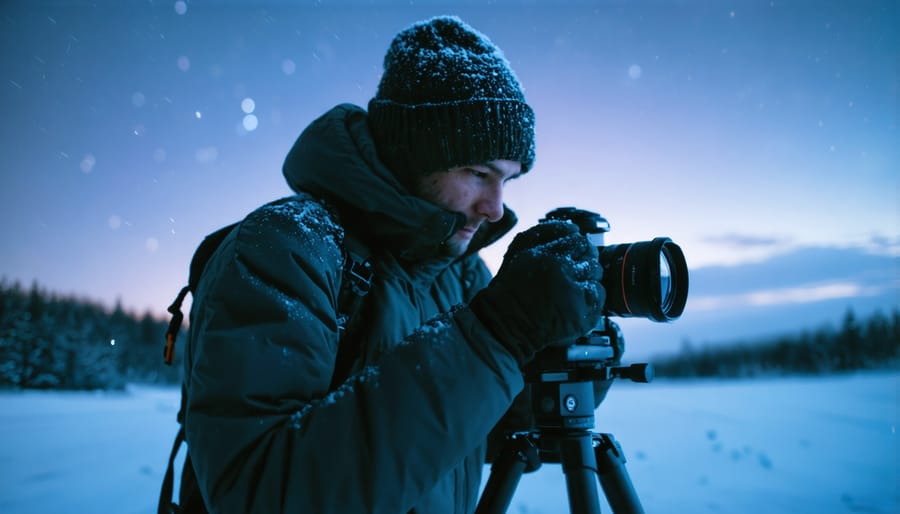
Capturing the ethereal dance of the aurora borealis requires some preparation and the right techniques. Start by investing in a sturdy tripod – it’s essential for those long exposure shots that bring out the vibrant colors. When photographing the northern lights, use a wide-angle lens to capture the full sweep of the sky, and set your camera to manual mode with an ISO between 800 and 3200.
Keep your shutter speed between 5 and 15 seconds – any longer might result in star trails. Set your aperture as wide as possible (f/2.8 or lower is ideal) to let in maximum light. Remember to shoot in RAW format for better post-processing flexibility.
Pack extra batteries as cold temperatures drain them quickly, and bring hand warmers to keep both your hands and camera gear functioning. Focus manually on a bright star or distant light source, as autofocus struggles in dark conditions. Most importantly, be patient and prepared to experiment with your settings as the light show changes throughout the night.
Accommodation Options
For the ultimate Northern Lights experience, choosing the right accommodation can make all the difference. Iceland’s countryside offers charming glass-roofed igloos and luxury lodges specifically designed for aurora viewing. The ION Adventure Hotel near Thingvellir National Park features a Northern Lights bar with panoramic windows, perfect for cozy viewing on cold nights.
In Norway’s Tromsø region, the famous Malangen Resort provides private cabins with floor-to-ceiling windows facing north. For a truly unique experience, the Arctic TreeHouse Hotel in Finnish Lapland offers elevated suites with heated glass ceilings, allowing you to watch the dancing lights from the comfort of your bed.
Budget-conscious travelers can opt for aurora camps and wilderness lodges in Alaska, which often include guided viewing sessions and photography workshops. The Borealis Basecamp near Fairbanks features geometric domes with transparent roofs, combining comfort with unobstructed views.
For those seeking exclusivity, Sweden’s ICEHOTEL offers art suites carved from ice, while the Aurora Sky Station in Abisko provides overnight stays at the observation tower. Remember to book accommodations well in advance, as these specialty lodgings fill up quickly during peak viewing seasons from September to March.
Consider properties that offer aurora wake-up calls, ensuring you don’t miss a moment of this magnificent natural light show.
Making Memories Last
Capturing the magic of the northern lights goes beyond simply witnessing them – it’s about creating memories that will last a lifetime. Bring a camera with manual settings and a sturdy tripod to photograph the dancing lights, but remember to first spend time simply absorbing the spectacular show with your own eyes. Many experienced aurora chasers recommend maintaining a “northern lights journal” to record the details of each sighting, including the date, location, and intensity of the display.
Consider bringing a thermos of hot chocolate or coffee to make your viewing experience more comfortable and memorable. Pack comfortable chairs or a blanket to sit on, and dress in layers to stay warm during the long wait. Sharing the experience with friends or family can make it even more special – there’s something magical about witnessing nature’s light show together in hushed amazement.
To enhance your connection with this natural phenomenon, learn about the local legends and scientific explanations beforehand. Many indigenous cultures have fascinating stories about the aurora borealis that add another layer of meaning to your viewing experience. Download an aurora forecast app to track the best viewing conditions and increase your chances of a successful sighting.
Don’t forget to turn off your phone’s notifications and minimize screen time while waiting. This helps your eyes adjust to the darkness and allows you to be fully present in the moment. Consider bringing a small voice recorder to capture your immediate reactions and emotions – these authentic responses will become treasured memories years later.
The Northern Lights stand as a testament to nature’s most spectacular light show, captivating viewers with their ethereal dance across the night sky. As one of the world’s most remarkable natural wonders, the aurora borealis continues to draw adventurers, photographers, and dreamers from every corner of the globe. Whether you choose to witness this magnificent phenomenon from the snow-covered landscapes of Iceland, the pristine wilderness of Alaska, or the serene fjords of Norway, each destination offers its own unique perspective on this celestial marvel.
Remember that timing, patience, and proper preparation are key to a successful aurora viewing experience. By following the viewing tips, choosing the right location, and keeping an eye on solar activity forecasts, you’ll maximize your chances of witnessing this incredible spectacle. Don’t forget to bring your camera to capture the moment, but also take time to simply stand in awe of nature’s greatest light show.
The Northern Lights remind us of our planet’s connection to the cosmos and the endless wonders that await those willing to venture into the night. Start planning your aurora adventure today – an unforgettable experience beneath the dancing lights awaits!