
Esperance’s famous Pink Lake no longer displays its signature bubblegum hue. The lake lost its vibrant pink color years ago due to changes in salt concentration and algae levels, and as of 2026, it remains a pale, milky blue or white for most of the year. While this might sound disappointing, the surrounding Esperance region offers stunning alternatives and the lake itself sits within a spectacular coastal landscape that’s absolutely worth exploring.
Located in the northwest of Esperance, approximately 600 kilometers southeast of Perth, Western Australia, Pink Lake remains open year-round with free entry and 24/7 access. The viewing area takes just minutes to visit, and you’ll find interpretive signs explaining the science behind pink lakes and why this particular one changed. Even without the pink phenomenon, the lake provides a unique vantage point overlooking the turquoise waters of the Southern Ocean and nearby beaches that rank among Australia’s finest.
The good news for pink lake enthusiasts? Western Australia hosts several reliably pink salt lakes, with Hutt Lagoon being the standout alternative. That massive pink wonder, located near Geraldton, delivers the vibrant color you’re chasing and offers free access as well. Depending on the season, time of day, and cloud coverage, Hutt Lagoon shifts from red to pink to purple, with the rainbow of colors most spectacular from June to January.
This guide will walk you through what to expect at Esperance’s Pink Lake today, how to make the most of your visit despite the color change, and where to find those picture-perfect pink waters elsewhere in Western Australia.
What Happened to Esperance’s Pink Lake?
Pink Lake earned its name honestly. For decades, this saline lake northwest of Esperance dazzled visitors with vibrant bubblegum-pink waters that seemed plucked from a fantasy landscape. The secret behind that otherworldly color? Tiny organisms called halophilic algae cause pink hues in extremely salty waters. These salt-loving algae produce beta-carotene (the same pigment that makes carrots orange) as protection from intense sunlight. When conditions align perfectly, high salt concentration, bright sun, and thriving algae populations, the result is that signature pink glow.
So what changed? Esperance’s Pink Lake hasn’t lost its ability to turn pink entirely, but it rarely displays those famous colors anymore. The primary culprit is altered salinity. The lake sits close to the ocean, and changes in the area’s hydrology, including road construction that modified natural water flow, disrupted the delicate salt balance these algae need to thrive. Think of it like a recipe where the measurements got thrown off. Too much freshwater dilution, and the halophilic algae population crashes. Without enough algae producing beta-carotene, the pink fades to pale gray or white.
Weather patterns play a role too. Extended dry spells can concentrate salt and potentially restore some color, while heavy rains dilute it further. The lake isn’t broken or permanently damaged, it’s responding to environmental shifts the way natural systems do. Some visitors still catch fleeting pink tints during specific conditions, but the reliable, vibrant display that made Pink Lake famous has become increasingly rare. It’s a reminder that these natural wonders exist in a constant state of flux, shaped by forces beyond our control.
Visiting Pink Lake Esperance: What to Expect in 2026
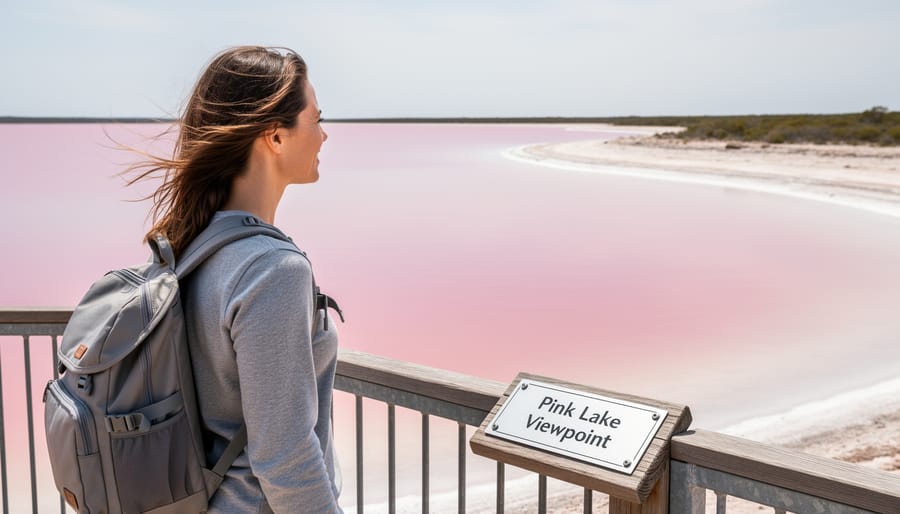
Getting to Pink Lake is straightforward, but it’s worth knowing exactly what awaits you. The lake sits just northwest of Esperance township, about 600 km southeast of Perth along Western Australia’s stunning coastline. You’ll find it right off Pink Lake Road, making access easy whether you’re driving a sedan or a rugged 4WD.
Here’s the good news: Pink Lake is open year-round, 24 hours a day, and there’s no entrance fee. You can pull up whenever suits your schedule, though early morning offers the calmest conditions and softer light for photography. The lack of gates or designated hours means you’re free to explore at your own pace, which fits perfectly with the spontaneous nature of road-tripping through WA.
Now for the reality check. Don’t expect the vibrant bubblegum hues you’ve seen in vintage postcards or social media throwbacks. Today’s Pink Lake typically appears as a pale, washed-out salt flat with subtle pinkish tones at best. Most visitors describe it as more beige or white than pink, particularly during drier months when water levels drop. The striking color that made it famous has faded due to changes in the lake’s salt concentration and the decline of the algae responsible for that distinctive pink.
The viewing experience itself is simple. There’s a designated lookout area where you can safely observe the lake without disturbing the fragile salt crust ecosystem. The lake stretches out before you, bordered by sand dunes and coastal scrub that create an otherworldly landscape even without the pink factor. On windy days, you’ll see salt crystals catching the light, and the surrounding bushland teems with birdlife.
What saves this visit from disappointment is context. Understanding you’re seeing a natural system in transition makes the experience more meaningful than chasing an Instagram fantasy. The surrounding area remains gorgeous, with turquoise Southern Ocean waters visible in the distance and pristine beaches minutes away. Think of Pink Lake as one stop on a broader Esperance adventure rather than the sole destination, and you’ll leave satisfied rather than let down.
Western Australia’s Pink Lakes That Still Dazzle
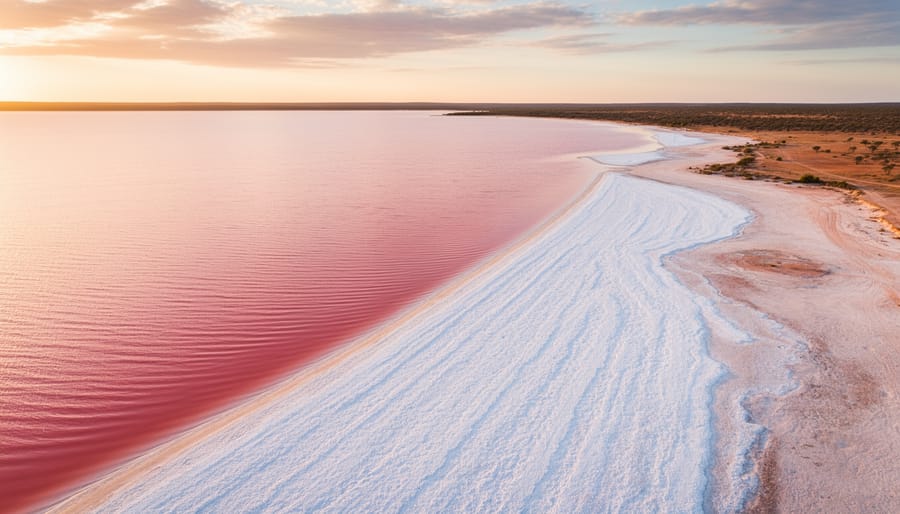
Hutt Lagoon: The Crown Jewel
Hutt Lagoon delivers what Esperance’s Pink Lake no longer can: a reliably vibrant pink spectacle that’ll have you questioning if someone dumped food coloring into the water. Located roughly 520 kilometers north of Perth near the town of Kalbarri, this massive salt lake stretches 14 kilometers long and offers multiple vantage points where the colors shift from bubblegum pink to deep magenta depending on where you stand.
The best part? Access is completely free, and you can explore at your own pace without crowds or barriers between you and the water. For photographers, the George Grey Drive viewpoint on the eastern shore provides sweeping panoramas, while getting down to the salt-crusted shoreline gives you that Instagram-worthy perspective with the pink water extending to the horizon.
The lake’s color comes from salt-loving algae that thrives in the extreme salinity, and unlike Esperance’s temperamental Pink Lake, Hutt Lagoon maintains its punch year-round. Morning light brings out softer pinks and purples, while midday sun intensifies the reds. If you’re planning a Western Australia road trip, this is your guaranteed pink lake payoff.
Pack water, sunscreen, and your sense of wonder. The surrounding landscape is stark and remote, but that isolation is part of what makes standing beside a fluorescent pink lake feel like you’ve stumbled onto another planet. It’s worth every kilometer of the drive.
Planning Your Pink Lake Road Trip
Combining multiple pink lake stops transforms a single destination visit into an epic Western Australian adventure. The distance between Esperance and Hutt Lagoon spans roughly 1,400 km, making this a serious outback journey that demands smart road trip planning.
Break the journey into manageable segments. Most travelers split this into three or four days of driving, with overnight stops in towns like Southern Cross or Geraldton. This gives you time to explore lesser-known natural attractions along the route without exhausting yourself behind the wheel.
Camping options abound if you want to immerse yourself in the landscape. Free camping areas dot the region, though facilities are basic. Bring all essentials, water included, since remote stretches offer limited services. Check local council websites before setting up camp, as restrictions change seasonally.
Remote WA travel requires preparation. Fuel up whenever possible, carry spare water and food, and keep your phone charged for navigation and emergencies. Cell coverage disappears for hours at a time, so download offline maps beforehand.
June through January offers optimal viewing conditions for pink lakes, giving you a seven-month window to plan around. Traveling during shoulder seasons means fewer crowds and cooler temperatures for outdoor exploration. The landscape transforms with each season, making every trip unique.
Making the Most of Your Esperance Adventure
While Pink Lake’s faded hues might disappoint at first, Esperance’s coastline delivers some of Australia’s most spectacular outdoor experiences. The region’s beaches rival anything you’ll find on the continent, and the surrounding wilderness offers adventures that’ll make your pink lake detour feel like the perfect excuse to explore.
Lucky Bay consistently ranks as one of the world’s finest beaches, and for good reason. The sand squeaks underfoot because it’s 98% pure quartz, and the water shifts through impossible shades of turquoise. Kangaroos often lounge right on the beach here, creating surreal photo opportunities that visitors travel thousands of miles to capture. The beach sits within Cape Le Grand National Park, about 50 km east of Esperance, where coastal camping spots let you wake to ocean views.
The park’s hiking trails range from easy coastal walks to challenging summit climbs. Frenchman Peak rises 262 meters above the surrounding landscape, rewarding hikers with panoramic views across white beaches and the Southern Ocean. The trail takes about two hours return and gets steep near the top, but the scramble’s worth it. Lucky Bay Loop and Hellfire Bay trails offer gentler options that weave through coastal heath and granite outcrops.
For wildlife enthusiasts, Twilight Beach and Observatory Point provide excellent spots for watching southern right whales during their migration season. Seals, dolphins, and sea lions frequent the waters year-round. The Great Ocean Drive, a 40-km scenic loop starting from Esperance, connects multiple beaches and lookouts where you can spot marine life from clifftop vantage points.
Camping in Cape Le Grand National Park brings you closest to nature, though sites book out quickly during peak periods. The park operates on leave no trace principles, so pack out everything you bring and respect the fragile coastal environment. Alternatively, Esperance town offers more facilities while keeping you within striking distance of the region’s natural highlights.
Duke of Orleans Bay and Thistle Cove add variety to your beach explorations, each offering different swimming conditions and scenery. The region’s granite formations create sheltered coves and dramatic headlands that shift character with the light and tide.
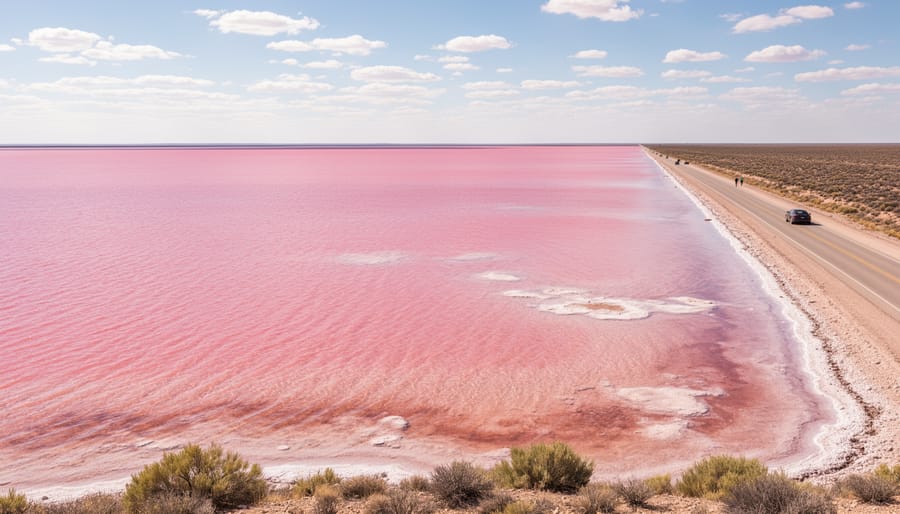
Photography Tips for Capturing Pink Lakes
The shifting colors of pink lakes create unique challenges and opportunities for outdoor photographers. Your photos can capture anything from bubble-gum pink to deep magenta, depending on conditions you’ll encounter in the field.
Timing matters more than expensive gear when shooting pink lakes. Early morning and late afternoon provide the richest colors, as low-angle sunlight intensifies the pink, red, and purple hues naturally present in the water. Overcast days might seem disappointing at first, but they often produce the most saturated colors by eliminating harsh shadows and glare. Bright midday sun can wash out the pink tones you traveled to see, though it works well for aerial perspectives if you’re using a drone.
Your smartphone captures pink lakes surprisingly well, especially newer models with good dynamic range. For those carrying cameras, a polarizing filter cuts surface reflection and deepens color saturation without complex post-processing. Wide-angle shots work beautifully for showing the contrast between pink water and surrounding landscape, while telephoto perspectives compress the scene and can make colors appear more intense.
Consider composition beyond the water itself. Including shoreline elements, salt formations, or distant hills creates context that makes your landscape photography more compelling than simple color documentation. The lake’s appearance changes throughout your visit as wind patterns shift algae concentrations and cloud shadows move across the surface, so take multiple shots from the same spot at different times.
Pack lens wipes, salt spray and dust coat equipment quickly in these exposed coastal and inland locations.
The pink lake phenomenon reminds us that nature doesn’t follow a script. Whether Esperance’s Pink Lake greets you with subtle earth tones or you stand before Hutt Lagoon’s vibrant fuchsia expanse, you’re witnessing something extraordinary. The unpredictability isn’t a disappointment, it’s what makes every outdoor adventure genuine.
Western Australia’s pink lakes offer a perfect excuse to venture into the outback, combining iconic natural wonders with remote beaches, rugged trails, and night skies that’ll make you forget your phone exists. The journey between these colorful lakes reveals landscapes that most travelers miss, and that’s where the real magic happens.
We believe the best adventures happen when you embrace what nature offers on its own terms. Pink Lake Esperance might not match those viral photos anymore, but the free, 24/7 access means you can experience it honestly, then explore the surrounding coastline that earned this region its reputation. That’s the spirit we champion here at Chesterfield Outdoors, seeking out natural beauty while staying grounded in reality.
Pack your camping gear, charge your camera, and head west. The outback is waiting.