
Step back in time to experience Chesterfield’s industrial heritage through the vibrant crafts and traditions that shaped our community long before the age of machines. In these rolling hills and along the winding Connecticut River, skilled artisans once transformed raw materials into essential tools and treasures using nothing but their hands, basic tools, and knowledge passed down through generations. From the rhythmic clang of the blacksmith’s hammer to the patient weaving of wool on wooden looms, these pre-industrial practices didn’t just produce goods – they created a rich tapestry of sustainable living that still offers valuable lessons for modern outdoor enthusiasts. Today, these ancient skills are finding new life among those seeking to reconnect with nature and rediscover the satisfaction of creating something meaningful with their own hands.
The Roots of Chesterfield’s Craft Heritage
Native American Influences
The indigenous peoples of the Chesterfield region, particularly the Abenaki, left an indelible mark on local craft traditions that continue to inspire outdoor enthusiasts today. Their sophisticated techniques for basket weaving using black ash and sweetgrass became foundational skills passed down through generations. Local artisans still practice these methods, creating durable packs and containers perfect for gathering wild berries and herbs.
The Abenaki’s masterful approach to birch bark canoe construction influenced not just transportation but also taught valuable lessons about working with natural materials. Their methods of selecting and processing materials demonstrated deep environmental knowledge, showing how to harvest resources sustainably while maintaining forest health.
Perhaps most significantly, Native American traditions of crafting snowshoes and fishing weirs shaped winter survival skills that evolved into beloved local pastimes. These practical innovations helped early settlers adapt to the region’s challenging climate and continue to inspire modern outdoor gear designs.

Early Settler Adaptations
Early settlers in Chesterfield brought their time-tested European crafting skills but quickly discovered they needed to adapt to the materials available in their new homeland. They cleverly combined Old World techniques with New World resources, creating unique hybrid traditions that defined early American craftsmanship.
Where they once worked with European oak, settlers learned to master the properties of native white pine and maple. Traditional basket weaving techniques were applied to local ash and birch bark, while European pottery methods were modified to work with local clay deposits found along the Connecticut River.
These adaptations weren’t just about survival – they represented a fascinating blend of cultures and knowledge. Settlers learned valuable lessons from Native American craftspeople, particularly in working with birch bark for containers and shelters. This exchange of ideas led to innovations like the distinctive New England style of woodworking, which combines European joinery with American wood species and tools adapted for local materials.
Essential Outdoor Crafts That Survived Time
Woodworking and Tool Making
Before power tools and mass production, the forests around Chesterfield buzzed with the sounds of hand tools shaping wood into essential items for daily life. Local craftsmen developed ingenious techniques for creating everything from ax handles to snowshoes, using only the materials nature provided and tools they often made themselves.
Wood selection was an art in itself. Craftsmen knew exactly which trees would yield the best material for specific tools – hickory for ax handles, ash for tool handles that needed flexibility, and maple for items requiring durability. They would carefully split logs along the grain rather than sawing them, preserving the wood’s natural strength.
The process of creating tools began with seasoning the wood – allowing it to dry slowly to prevent warping and cracking. Craftsmen would rough out the basic shape using axes and drawknives, then refine it with scrapers made from old saw blades. Final smoothing was done with dried horsetail plants, nature’s sandpaper.
These traditional methods weren’t just about making tools; they were about understanding the materials and working with nature rather than against it. Many of these techniques are still practiced today by local artisans who appreciate the superior quality and connection to heritage that hand-crafted tools provide. Visitors can often watch demonstrations of these age-old skills at local heritage events, where modern craftspeople keep these valuable traditions alive.

Leather Working Skills
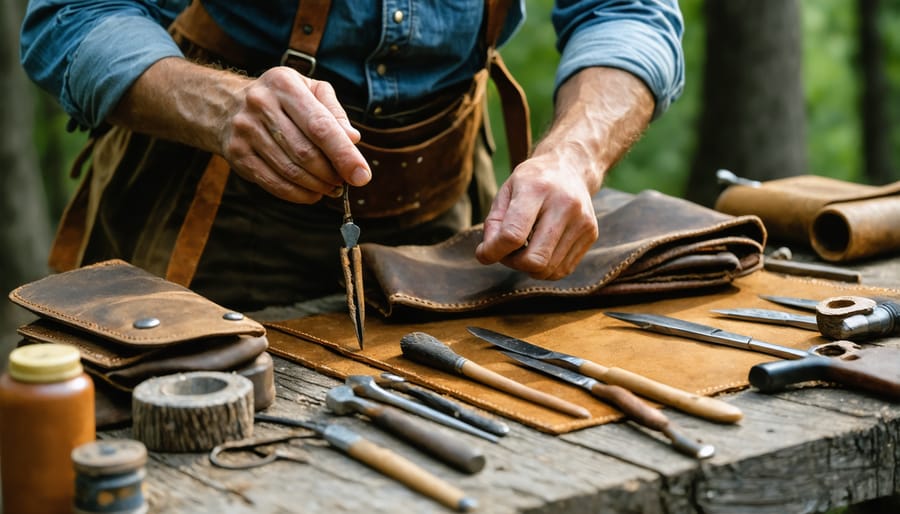
In the days before mass production, leather working was an essential skill that helped our ancestors create durable outdoor gear. Local craftspeople would carefully select hides from deer, moose, and cattle, treating them with natural tanning agents like tree bark and animal fats. These traditional methods produced waterproof, flexible leather that could withstand harsh New England weather.
Skilled leather workers crafted everything from sturdy boots and moccasins to weather-resistant bags and protective clothing. They used simple tools like awls, needles, and cutting knives to create strong seams and functional designs. The art of wet-forming leather allowed craftspeople to shape carrying cases and protective gear that maintained their form even after years of use.
One particularly interesting technique involved smoking the leather with specific hardwoods, which not only added water resistance but also helped prevent the material from becoming stiff in cold weather – a crucial feature for local hunters and trappers. Many of these traditional methods are still practiced today by local artisans who create authentic reproductions and teach these time-tested skills to new generations.
The leather working traditions of our region have directly influenced modern outdoor gear design. Those same principles of durability, weather resistance, and practical functionality continue to guide the creation of today’s hiking boots, backpacks, and outdoor equipment.
Where Tradition Meets Modern Adventure
Practical Applications Today
Today’s outdoor enthusiasts are rediscovering the value of pre-industrial skills, incorporating them into modern adventure culture in creative ways. Traditional fire-starting techniques using flint and steel have become popular among campers seeking authentic experiences. Hand-carved wooden utensils and bowls, crafted using centuries-old methods, add a special touch to camping meals while reducing reliance on plastic items.
Many outdoor adventurers now practice basic rope-making from natural fibers, learning skills that were once essential for daily life. These traditional methods not only provide practical solutions when modern equipment fails but also help create deeper connections with nature. Basket weaving with local materials has found new life among foragers and wilderness survivalists, offering lightweight, biodegradable containers for gathering wild edibles.
Local workshops in Chesterfield teach these heritage skills, helping participants develop self-reliance while preserving important cultural traditions. These time-tested techniques prove that sometimes the old ways are still the best ways, especially when enjoying the great outdoors.
Local Learning Opportunities
Chesterfield offers several engaging opportunities to learn traditional crafts and skills from local artisans. The Chesterfield Historical Society regularly hosts historic craft demonstrations where visitors can watch and participate in activities like blacksmithing, wool spinning, and traditional woodworking.
The Old Town Hall Workshop Series, running from spring through fall, features hands-on classes in basket weaving, leather working, and pottery making. Local craftsman Dave Miller teaches monthly workshops on traditional tool maintenance and basic blacksmithing techniques at his restored 18th-century forge.
For families, the Chesterfield Community Center offers weekend programs where children can try their hand at candle making, simple weaving, and colonial games. The nearby Asbury Farm hosts seasonal workshops focusing on heritage farming methods, including traditional fence building and basic animal husbandry.
Sign up for classes through the Historical Society’s website or visit the Community Center’s bulletin board for updated schedules and registration information. Most workshops welcome beginners and provide all necessary materials.
As we embrace the future of outdoor recreation, preserving Chesterfield’s pre-industrial craft traditions becomes increasingly vital. These time-tested skills not only connect us to our heritage but also enhance our modern outdoor experiences. Whether it’s learning to craft a sturdy walking stick, weaving a basic basket for foraging, or understanding traditional navigation methods, these skills add depth and authenticity to our adventures.
By keeping these traditions alive, we ensure that future generations of outdoor enthusiasts can experience the satisfaction of self-reliance and the joy of creating with their own hands. Local workshops and community events continue to pass down these valuable skills, creating bridges between past and present. For families exploring the outdoors together, these craft traditions offer unique bonding opportunities and teach children the value of patience, creativity, and resourcefulness.
Let’s celebrate and preserve these pre-industrial crafts not just as historical curiosities, but as living skills that enrich our outdoor adventures and deepen our connection to the natural world around us.