
Pack these five survival essentials before venturing into New Hampshire’s wilderness – they could mean the difference between life and death in an emergency. Whether you’re hiking the Pisgah State Park trails or camping in Chesterfield’s backcountry, mastering essential survival skills starts with having the right gear. From unexpected weather changes to navigation challenges, these critical items will help you handle whatever nature throws your way. Local rescue teams report that properly equipped hikers are far more likely to overcome outdoor emergencies successfully. After consulting with Chesterfield’s most experienced outdoor guides and survival experts, we’ve identified the five most crucial items that should always have a place in your pack.
First Aid Kit: Your Wilderness Insurance Policy
Must-Have Medical Supplies
When venturing into Chesterfield’s wilderness, having the right medical supplies can mean the difference between a minor setback and a serious emergency. Start with a waterproof first-aid kit that includes essential wilderness first aid skills reference guide. Pack plenty of adhesive bandages in various sizes, sterile gauze pads, and medical tape for treating cuts and scrapes you might get while hiking our rocky trails.
Include antibiotic ointment and antiseptic wipes to prevent infection, along with pain relievers like ibuprofen for unexpected aches. Don’t forget tweezers for removing splinters or ticks – a common concern in our wooded areas. An elastic bandage is crucial for sprains that can occur on our challenging terrain.
For our variable New Hampshire weather, pack emergency blankets and instant cold/heat packs. Include any personal medications you require, and consider adding a snake bite kit if you’re planning to explore our more remote areas. Remember to check expiration dates regularly and replace items as needed – medical supplies are only reliable when they’re fresh and ready to use.

Local Considerations for New Hampshire
When preparing your survival kit for New Hampshire’s varied terrain, consider our unique wildlife and environmental challenges. Pack extra antihistamines and hydrocortisone cream for encounters with poison ivy, which is prevalent along our hiking trails. A specialized snake bite kit, while rarely needed, provides peace of mind when exploring our rocky areas where timber rattlesnakes occasionally appear.
For tick prevention, include permethrin-treated clothing and extra tick removal tools – these tiny creatures are active from early spring through late fall in our wooded areas. During summer months, add calamine lotion and aloe vera gel for treating black fly bites, particularly if you’re hiking near water sources.
Given our rapid weather changes, especially in the White Mountains region, include both sunscreen and hypothermia blankets. Local hikers swear by moleskin patches for blisters, as our terrain can be particularly challenging on footwear. Don’t forget electrolyte replacement packets – our humidity can lead to quick dehydration, even during cooler months.
A basic first aid kit should be supplemented with waterproof bandages and antibacterial ointment, essential for treating minor cuts from our granite outcroppings.
Navigation Tools That Never Fail
Maps and Compass Basics
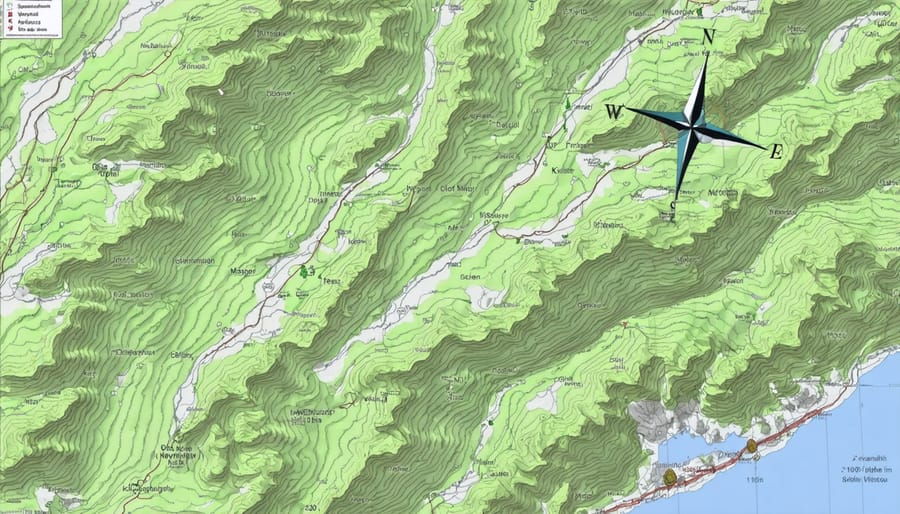
Even in our age of smartphones, a reliable compass and physical map remain essential survival tools, especially in Chesterfield’s diverse terrain. Pack a detailed topographic map of the area you’ll be exploring and a quality magnetic compass – these never run out of battery! Learn to identify key landmarks like Mount Wantastiquet and the Connecticut River on your map, as they can serve as valuable reference points.
Before heading out, practice basic compass skills: finding true north, taking bearings, and matching map features to your surroundings. Our local terrain can be deceptively complex, with numerous trails crisscrossing through the forests. Remember to keep your compass away from metal objects and electronic devices that might interfere with its accuracy.
For added safety, always mark your starting point and intended route on your map, and share this information with someone back home. Consider taking a local navigation workshop – many experienced hikers in our community are happy to share their knowledge!
Digital Backup Options
While traditional navigation skills are essential, modern technology can serve as a valuable backup. Consider downloading offline maps of Chesterfield’s trail systems and the surrounding Pisgah State Park area on your smartphone. Apps like AllTrails and Gaia GPS offer detailed topographical information that can be accessed without cell service. Store important emergency contacts, trail guides, and survival manuals as PDFs on your device. Remember to pack a portable power bank to keep your devices charged – the rugged terrain of New Hampshire can lead to unexpected delays. A compact solar charger can also prove invaluable during extended outings. However, always treat digital tools as supplements to, never replacements for, physical maps and basic navigation skills. The variable weather conditions in our region can affect device performance, making redundancy in your navigation tools crucial for safety.
Emergency Shelter and Weather Protection
Lightweight Shelter Solutions
When it comes to staying safe in the great outdoors, having reliable shelter can mean the difference between a challenging situation and a life-threatening emergency. A lightweight emergency blanket, often called a space blanket, should be at the top of your shelter checklist. These metallic sheets weigh just ounces but can reflect up to 90% of your body heat, making them invaluable during unexpected weather changes common in New Hampshire’s wilderness.
For added protection, pack a compact emergency tent or bivvy sack. These pack down to about the size of a soda can and can be lifesavers during sudden storms that roll through the Chesterfield area. Local hiking experts recommend carrying a length of paracord (at least 50 feet) to create makeshift shelters using natural materials or to secure your emergency tent in windy conditions.
Remember, the diverse terrain around Chesterfield means you might need different shelter solutions depending on your location. Whether you’re exploring Pisgah State Park or hiking along the Connecticut River, these lightweight options ensure you’re prepared without weighing down your pack.
Weather-Specific Gear for New England
New England weather can be unpredictable and extreme, making proper gear essential for outdoor adventures in Chesterfield. For winter excursions, pack a high-quality insulated jacket and thermal base layers that wick away moisture. Merino wool socks are worth the investment, as they keep feet warm even when wet. Don’t forget waterproof, insulated boots rated for below-zero temperatures.
During spring and fall, focus on layering with quick-dry materials. A reliable rain shell is crucial – look for breathable materials with sealed seams. Local hikers swear by convertible pants that zip off into shorts, perfect for those days when temperatures swing dramatically.
Summer brings its own challenges. While the days can be hot and humid, evenings often cool significantly. Pack lightweight, long-sleeve shirts with UV protection and a compact fleece layer. To stay safe in wildlife territory, bright-colored clothing helps maintain visibility during dawn and dusk hours.
Year-round essentials include a moisture-wicking hat, versatile gloves, and a lightweight emergency poncho. Remember, weather conditions can change rapidly in the mountains, so always pack more than you think you’ll need.
Water Filtration and Storage
Filtration Methods
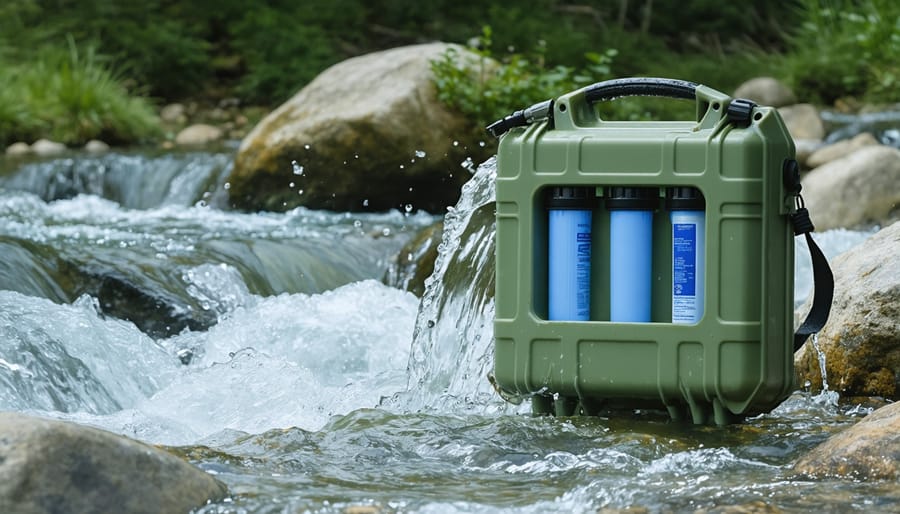
When it comes to making water safe for drinking in the wilderness, you’ve got several reliable options. The most straightforward method is boiling water for at least one minute, which effectively kills harmful bacteria and parasites. If you’re carrying a portable water filter, look for one that can remove particles down to 0.2 microns – perfect for dealing with the stream water you’ll find along Chesterfield’s hiking trails.
Chemical treatment is another trustworthy approach. Water purification tablets or drops containing iodine or chlorine dioxide are lightweight and take up minimal space in your pack. Just remember to wait the full recommended treatment time, usually around 30 minutes.
For emergencies, you can create a DIY filter using layers of cloth, sand, and charcoal from your campfire. While not as reliable as commercial filters, this method can help remove visible particles and improve taste. Whatever method you choose, always pack multiple ways to purify water – it’s better to have backup options than none at all.
Local Water Sources
Chesterfield’s pristine landscape offers several reliable water sources for outdoor enthusiasts. The Connecticut River, which forms the western border of town, is our most prominent water source. You’ll also find numerous brooks and streams throughout the area, with Catsbane Brook and Governor’s Brook being particularly accessible. While these sources are plentiful, always treat any natural water before drinking.
Carry a quality water filter or purification tablets in your pack. Local outdoor experts recommend a filter with a pore size of 0.2 microns or smaller to remove harmful bacteria and protozoa common in our region’s waterways. During winter months, snow and ice can be melted for drinking water, but remember it still needs to be purified. If you’re hiking near Pisgah State Park, you’ll find several reliable springs, but as with all water sources, proper treatment is essential for safe consumption.
Keep a collapsible water container in your pack – it’s lightweight and perfect for storing treated water during longer treks through our beautiful wilderness.
Fire Starting Equipment
When it comes to fire-starting equipment, having multiple reliable methods is crucial for survival in our diverse New Hampshire wilderness. A waterproof container should house at least three fire-starting tools: a quality lighter, waterproof matches, and a ferrocerium rod (fire steel). Local outdoor experts recommend the fire steel as your primary tool since it works in wet conditions and can last for thousands of strikes.
Pack your fire kit with easy-to-light tinder such as dryer lint, cotton balls soaked in petroleum jelly, or char cloth. These materials are especially helpful during our damp spring seasons or after summer thunderstorms. Many experienced hikers in the Chesterfield area also carry a small magnifying glass as a backup – it’s lightweight and never runs out of fuel on sunny days.
Remember to store your fire-starting tools in different locations within your pack. This way, if one gets lost or damaged, you’ll still have backup options. When exploring our local trails, keep an eye out for natural tinder like birch bark and dry pine needles, which are abundant in our forests and make excellent fire-starting materials.
Remember, your survival in the great outdoors often depends on being well-prepared. These five essential items – a reliable water filter, multi-tool, emergency shelter, first-aid kit, and fire starter – form the foundation of any outdoor safety kit. While having the right gear is crucial, it’s equally important to know how to use each item effectively. Consider taking a local wilderness safety course or joining group hikes to practice your survival skills. Always inform someone about your outdoor plans, check weather conditions before heading out, and carry a fully charged cell phone as backup. The beautiful wilderness around Chesterfield offers countless adventures, but nature demands respect – stay prepared, stay safe, and you’ll be ready for whatever the trail throws your way.