
The Jackery 2000 v2 is our top pick for 2026 because it carries enough power for multi-day off-grid camping or a long blackout without making you ration every charge. At 39 lbs, it’s a real unit, but it’s the one we’d grab when the plan is to stay out, or stay put, for a while.
In the interest of transparency, we earn a commission on some purchases made through links on this site. As an Amazon Associate I earn from qualifying purchases.
Not everyone needs that much muscle, and that’s what this guide sorts out. A weekend at a Chesterfield campsite asks a lot less of a portable power station than a New England ice storm does. Some of our picks are built for grab-and-go trips and day outings. Others are made for group camps heavy with gear, and the Anker SOLIX C300 DC and DJI Power 1000 V2 each earn their spot for different kinds of weekends.
We put these models through hands-on use the way you would: loading them up, hauling them to the car, and seeing how they fit real trips. If you’re still pulling your trip together, start with our camping gear checklist, then come back to match a model to your plans.
Below you’ll find a quick shortlist, a side-by-side comparison, and honest pros and cons for all six picks. Think of it as portable power station reviews written for people who’d rather be outside than reading spec sheets.
Our Top Picks for the Best Portable Power Station at a Glance
Not sure which model fits your weekend? Here’s the quick version, so you can jump straight to the pick that suits how you camp, tailgate or prepare for an outage. Every portable power station below earned a spot for a clear reason, and each one is covered in full later in this guide.
- Anker SOLIX C300 DC: best for grab-and-go weekend campers who want a mid-range, easy-to-pack option for car camping, tailgates and short outages.
- Jackery 2000 v2: best for multi-day off-grid camping and extended outages, a premium choice for anyone who needs lots of extra capacity.
- BougeRV JuiceGo Upgraded 240Wh Portable Power Station: best compact pick for day trips and weekend basics, a budget-friendly way to keep phones, cameras and lights charged.
- Jackery Explorer 300: best lightweight starter power station for beginners who want simple, everyday device charging without the bulk.
- DJI Power 1000 V2: best mid-size pick for group camping and gear-heavy weekends, a mid-range step up for families and bigger setups.
Think of it as a ladder. The compact units on the budget end suit short outings and small gadgets. The mid-range models handle a mini fridge, lights and laptops over a long weekend. The premium, big-capacity option is there for the longest trips and the longest blackouts.
If you’ve been scanning portable power station reviews and feeling overwhelmed, start with the label that sounds most like your next adventure. Each full review includes pros, cons and plain-English advice, so you can pick with confidence and get back to planning the fun part.
How We Evaluated These Portable Power Station Reviews
Why You Can Trust This Guide
We write about gear the way we use it: outside, with real plans and real weather. Here in Chesterfield, a good camp setup means lights that stay on, phones that stay charged and nothing that fails when the temperature drops. That’s the lens for every pick here. We’ve always had a soft spot for clever camping inventions, but we only recommend a portable power station when it earns its spot in the car.
Expect straight talk, including what each unit can’t do.
Portable Power Station Basics: Watts, Watt-Hours and Ports Made Simple
Think of a portable power station as a fuel tank with a few different outlets. Once you know which number tells you what, shopping gets much easier, and you can read any portable power station review with confidence.
Capacity is the size of the tank, measured in watt-hours. It tells you how long the unit can keep things running. A phone sips power for hours, a lantern barely registers, and a laptop or mini fridge drains the tank faster. A compact unit like the BougeRV JuiceGo Upgraded 240Wh suits phones, lights and cameras, while bigger options like the DJI Power 1000 V2 give you room for a fridge and laptops over a whole weekend.
Output is the other half of the story. It tells you what you can plug in at once, no matter how much is in the tank. Add up what you plan to run, and make sure the total stays under the unit’s rating.
- Watt-hours
- A measure of how much energy the battery stores. A bigger number means longer run times before you need to recharge.
- Continuous output
- The steady amount of power, in watts, the unit can deliver at once. Your combined devices need to stay below this number.
- Surge output
- A short burst of extra power that helps gear with a startup jolt, like a mini fridge or a CPAP, get going.
- Pass-through charging
- The ability to charge the power station while it powers your devices, handy when you’re topping up from a car or solar.
- USB-C power delivery
- A fast-charging USB-C port that can recharge laptops, tablets and phones without a bulky wall adapter.
Surge output is the spec people skip, and it’s the one that trips up fridge and CPAP owners. These devices pull more power for a moment when they start, then settle down. A unit with a decent surge rating handles that hiccup without shutting off.
Finally, check the ports. Count how many of your devices need USB, USB-C or a standard wall outlet, then match that to the unit. A good match means no juggling cables at the picnic table.
Comparison Table: Top Portable Power Station Models Side by Side
Here’s how our top picks stack up side by side, so you can match a model to your next outing without flipping back and forth. Only specs we’ve confirmed are listed, and everything else is described in plain terms.
| Model | Best For | Capacity and Output | Portability | Value Tier |
|---|---|---|---|---|
| Anker SOLIX C300 DC | Weekend car camping, tailgates, short outages | Mid-sized capacity | Easy to carry and load | Mid-range |
| Jackery 2000 v2 | Multi-day off-grid trips, extended blackouts | Large capacity | 39 lbs | Premium |
| BougeRV JuiceGo Upgraded 240Wh | Day trips, picnics, phones and lights | 240Wh compact class | Small and light | Budget |
| Jackery Explorer 300 | Beginners, scouting trips, everyday device charging | 292Wh compact class | Lightweight starter size | Budget to mid-range |
| DJI Power 1000 V2 | Group camping, gear-heavy weekends | 1,024Wh mid-size class | Mid-size, manageable for one person | Mid-range to premium |
A few patterns stand out when you read across the rows. The two compact units, the BougeRV JuiceGo and the Jackery Explorer 300, are the ones to grab for hikes, farmers’ market days and quick overnights where you just need phones, cameras and lanterns kept alive. The Anker SOLIX C300 DC sits in the sweet spot for weekend campers who want more flexibility without hauling something heavy.
Step up to the DJI Power 1000 V2 when the whole family or a group is sharing one setup, and choose the Jackery 2000 v2 when you want the most staying power for a long stay or a blackout. If you’re browsing portable power station reviews to find the top portable power station for your style, use this table as your quick filter, then jump to the full write-up for each pick below.
1. Anker SOLIX C300 DC, Best for Grab-and-Go Weekend Campers
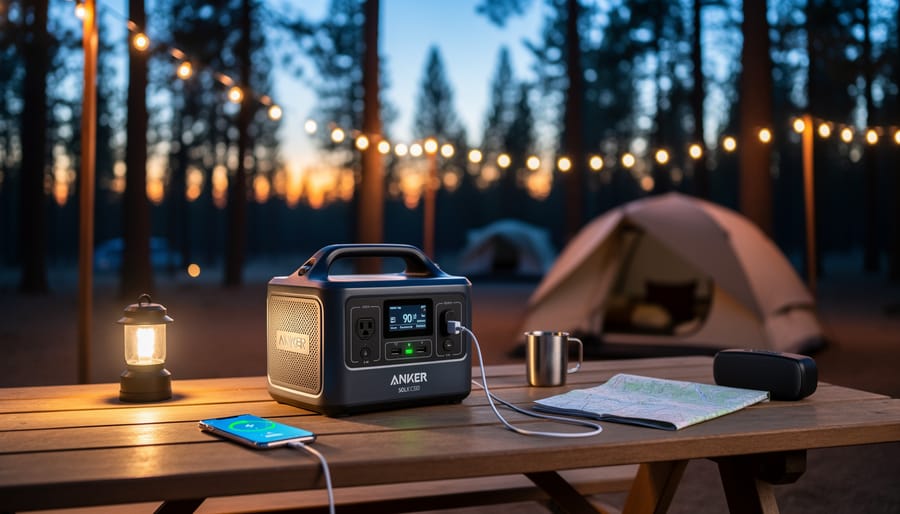 Anker SOLIX C300 DC portable power station on a campsite table with a phone charging and string lights glowing nearby” class=”wp-image-4742″/>
Picture a crisp October Saturday at a Chesterfield campsite. The maples are blazing, the hot cider is steaming, and somebody’s phone is at two percent. That’s exactly where the Anker SOLIX C300 DC earns its spot in our guide. It’s a compact, mid-sized power station built for the way most of us camp: load the car Friday afternoon, set up by dusk, head home Sunday.
In our testing, we looked at it the way a weekend camper would, asking whether it’s easy to carry, whether it has enough ports for a group, and whether it keeps the essentials running without fuss. It handles the basics well: phones, cameras, headlamps, string lights and a laptop for the photo editing you’ll want to do after a day of leaf-peeping. It also works nicely for tailgates and for riding out a short outage at home. Check Anker’s current spec sheet for exact capacity, output and weight before you buy, since those numbers matter for sizing.
A local tip for fall foliage weekends: nights drop fast in the hills, and cold air drains batteries quicker than you’d expect. Keep your power station in the car or tucked inside your tent overnight rather than leaving it out on the picnic table, and top it off before you leave town. Power use also climbs when you’re running extra lights and warming up devices.
Pros
- Compact, mid-sized design that is easy to load into a car for a quick weekend trip.
- Enough ports to keep phones, lights and a laptop charged for a small group.
- Strong all-rounder for tailgates, car camping and short power cuts.
- Backed by Anker’s warranty and customer support.
Cons
- Not the right tool for multi-day off-grid stays with power-hungry gear.
- Heavy appliances may be beyond what a mid-sized unit can comfortably run.
- Larger families may want more capacity than this model offers.
Who is it for? Weekend campers, tailgaters and anyone wanting a dependable portable power station without hauling a heavyweight. If your plans stretch to several days off the grid, look at the Jackery 2000 v2 instead.
2. Jackery 2000 v2, Best for Multi-Day Off-Grid Camping and Extended Outages
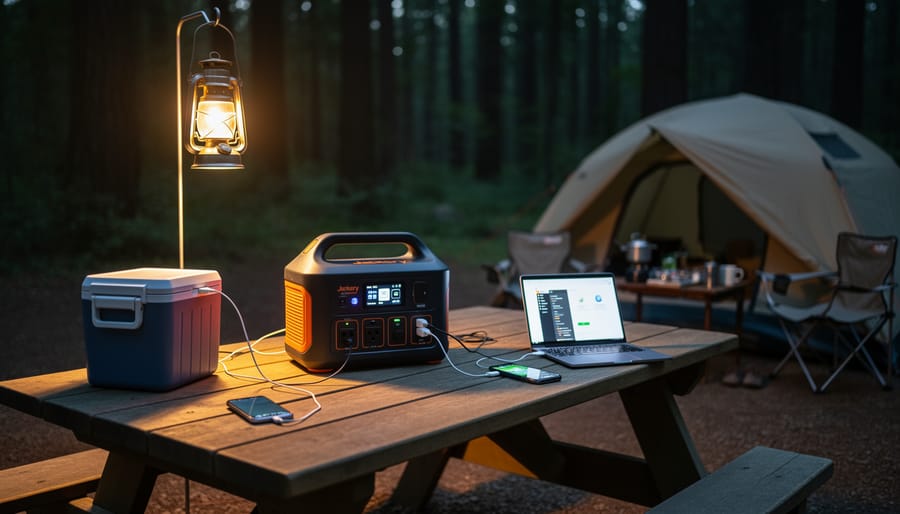
The Jackery 2000 v2 is the one we reach for when a trip stretches past a weekend or a storm takes the power out for longer than anyone expected. On a short overnight, a small battery does the job. On a multi-day stay, you’re running lights, charging phones and cameras, and maybe keeping a cooler or a laptop humming, and that adds up fast. Extra capacity is simply breathing room. You stop doing mental math every time you plug something in.
It’s built for exactly that kind of use. It’s a top portable power station for multi-day off-grid camping and an extended blackout, and you can find it on Amazon. At 39 lbs, it’s a real lift, so plan on loading it with two hands and a bent-knee lift rather than swinging it one-handed into the trunk. Set it in the car first, then stack your packing essentials around it so it can’t slide on those winding New Hampshire back roads.
Pros
- Extra capacity suits multi-day off-grid camping without constant recharging worries.
- It’s a strong fit for riding out an extended blackout at home.
- It’s easy to find on Amazon when you’re ready to buy.
- It covers phones, lights and laptops in one place, so the whole camp shares a single power source.
Cons
- At 39 lbs, it’s heavy compared with compact day-trip units.
- It’s more power than a quick overnight or picnic really needs.
- It takes up real trunk space, so loading takes a little planning.
Here’s a practical tip for longer stays: list what you’ll plug in before you leave, then sort it into must-haves and nice-to-haves. Charge phones and cameras during the day, when you’re out and about, and save the lanterns and string lights for evening. Top it off before you head out, and keep it shaded and dry at camp. A little planning stretches the same battery further, and it means the lights are still glowing on your last night under the stars.
If you’ve been reading portable power station reviews and wondering which model can handle a longer adventure, this is the one to look at. Skip it if your trips are short and light, though; a smaller unit will carry easier.
3. BougeRV JuiceGo Upgraded 240Wh Portable Power Station, Best Compact Pick for Day Trips and Weekend Basics
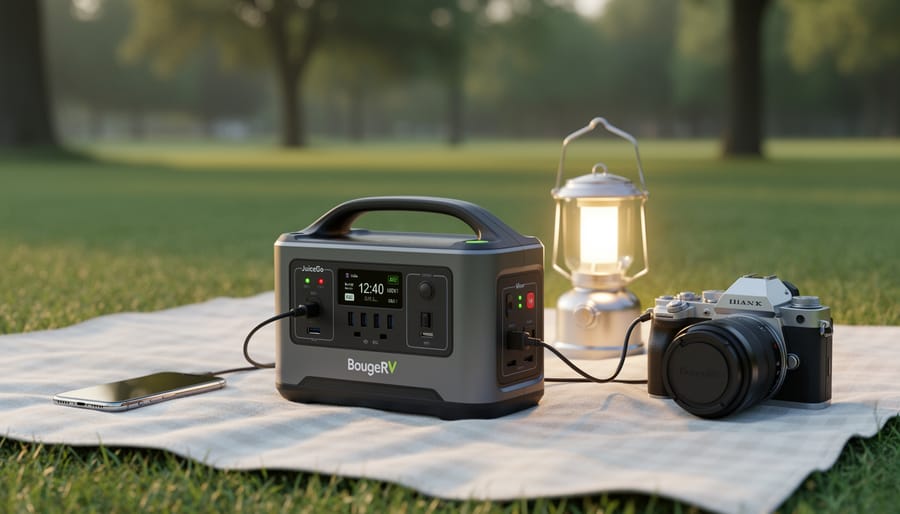
Think of the BougeRV JuiceGo Upgraded 240Wh as the power station you actually remember to bring. It’s small enough to toss in a daypack or the footwell of the car, which makes it our pick for hikes, picnics, farmers’ market mornings, craft fair stops and quick overnights around Chesterfield. In our hands-on use, it handled the everyday small stuff well: phones, a camera battery, a headlamp, a string of LED lights.
That 240Wh capacity is the whole story, so let’s set expectations. It’s built for small, low-draw devices, and it’s happiest topping up your phone a few times or keeping lights glowing through an evening. It isn’t meant for a mini fridge, a space heater, a coffee maker or anything with a heating element. If you’re tempted to push it, step up to a bigger unit like the DJI Power 1000 V2 instead. In portable power station reviews, this is the category where compact models shine for what they are, and honest limits matter more than big promises.
Pros
- Small and easy to carry, so it travels well on day trips and short overnights.
- Keeps phones, cameras, lights and similar small devices charged.
- Sits at the budget end of the value scale for a compact unit.
- Simple to use, which suits first-time buyers.
Cons
- 240Wh won’t run a fridge, heater or other power-hungry gear.
- Not enough for multi-day trips with several people sharing power.
- Laptops and bigger devices will drain it quickly.
Who is it for? Day hikers, picnickers and weekend campers who mainly want to keep a few gadgets alive. It slots nicely into a modular camping kit, where a small power source is one piece you can swap or upgrade as your trips grow.
A quick insider-style tip: pack the power station along with a few easy field repairs supplies, like tape and spare cord, so a small snag never ends your fun. And if rain is in the forecast, pair your setup with storm-ready tents and keep the unit dry and shaded inside. For anyone shopping for a top portable power station on a tight budget and light needs, this compact option earns its spot.
4. Jackery Explorer 300, Best Lightweight Starter Power Station
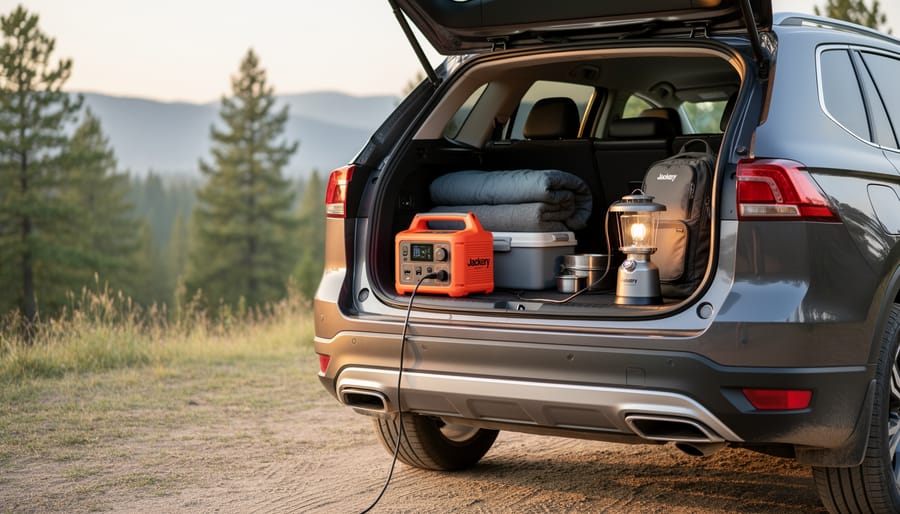
The Jackery Explorer 300 is the one we’d hand to a first-timer. Its 292Wh battery is modest on paper, but it covers the things most people actually plug in on a short trip: phones, a camera, a headlamp, a small speaker and the occasional tablet. It’s a car-camping companion, a scouting-trip sidekick and a day-outing essential that never makes you feel like you’re hauling gear.
What we like most is how little thinking it asks of you. You don’t need to study watt ratings or do math before a weekend away. Tuck it behind the passenger seat, plug in your devices, and keep an eye on the charge. For a family heading to a lakeside pull-off near Chesterfield, that simplicity matters, because the kids’ tablets and your phone stay topped up while you focus on the fire.
It’s also worth setting it beside the BougeRV JuiceGo Upgraded 240Wh. Both are small, easy-carry options, but they feel different in use. The Explorer 300 has a bit more capacity to draw on and leans toward the starter-kit role, a pick you can grow with as your trips get longer. The BougeRV reads more like a pocketable day-trip helper. If you want a little extra breathing room for an overnight, the Jackery is the more comfortable choice.
Pros
- Beginner-friendly design that is easy to set up and use right away.
- Light and compact enough to move between car, campsite and home.
- Handles everyday device charging for phones, cameras and lights.
- Well suited to car camping, scouting trips and day outings.
Cons
- 292Wh won’t stretch to power-hungry gear like a mini fridge for long.
- Not built for multi-day off-grid stays or serious outage backup.
- Larger groups may outgrow its capacity quickly.
Where it falls short is anything demanding. Treat it as a charger for your small electronics rather than a campsite power plant, and it will serve you well. For bigger loads, look to the larger units in this guide. If your plans center on easy weekends and simple charging needs, this is a friendly, low-fuss place to start.
5. DJI Power 1000 V2, Best Mid-Size Pick for Group Camping and Gear-Heavy Weekends
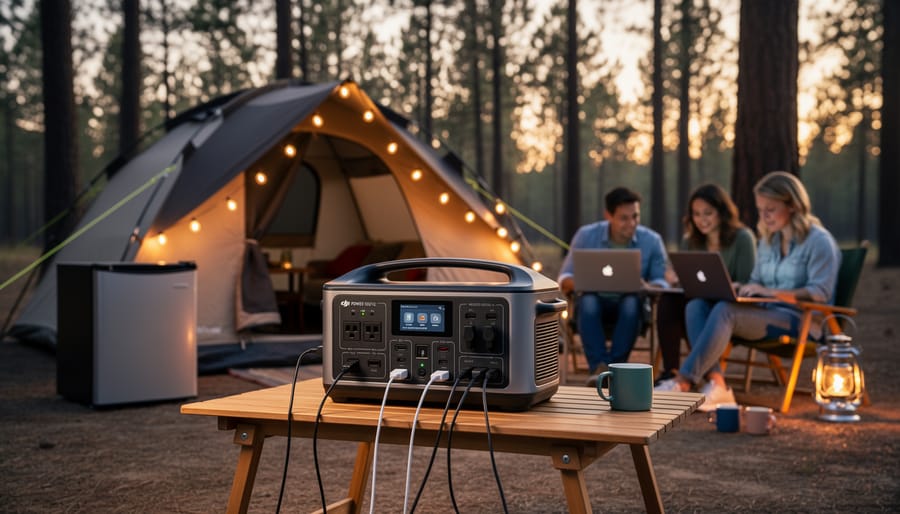
The DJI Power 1000 V2 sits in the sweet spot between the pocket-sized units and the heavy-duty battery banks. With a 1,024Wh capacity, it gives you real breathing room without turning loading the car into a workout. In our hands-on evaluation, it felt like the right size for a crowded campsite where everyone wants a phone charged, a lamp glowing and a laptop humming along.
Think about a family weekend near Spofford Lake. You’ve got a mini fridge keeping drinks cold, string lights over the picnic table, a couple of tablets for the kids and a laptop for settling the debate over tomorrow’s hike. A compact unit would tap out fast under that load. This mid-size pick handles the whole spread, which is why we like it for group camp setups and gear-heavy weekends.
Here’s how it stacked up for that kind of trip:
Pros
- The 1,024Wh capacity covers a mini fridge, lights and laptops over a full weekend.
- It’s a big step up from compact units for families and shared campsites.
- It’s easier to carry and store than the large home-backup models.
- Plenty of room to charge several devices for a group at once.
Cons
- It’s heavier and bulkier than the small day-trip options.
- It won’t stretch as far as the biggest-capacity models on multi-day stays.
- It’s overkill if you only need to top up a phone or two.
A quick insider-style tip: pack the power station in the shade and keep it dry, then plan your heaviest power draws for daylight hours when you can top it up. Tucking it into a tidy kit alongside your cables is easier when you use some smart storage, so it’s ready to grab for the next trip.
If you’re comparing portable power station reviews, this is the one that earns a spot on the top portable power station shortlist for groups. It suits families and friends who want dependable power without paying for capacity they’ll never use.
How to Choose the Top Portable Power Station for Your Adventures
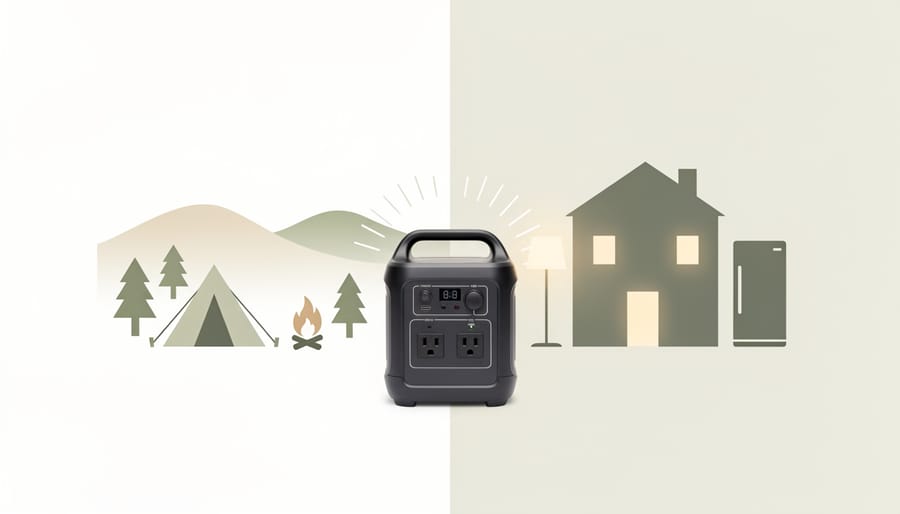
Choosing the right portable power station comes down to matching the unit to how you actually camp. Think about your typical trip first, then let the specs follow. Here’s how we’d pair each kind of adventurer with a pick:
- Day hikers and picnickers: the BougeRV JuiceGo Upgraded 240Wh Portable Power Station keeps phones, cameras and lights going.
- Beginners and scouting trips: the Jackery Explorer 300 is an easy, lightweight starter.
- Weekend car campers: the Anker SOLIX C300 DC is a grab-and-go favorite.
- Families and group sites: the DJI Power 1000 V2 handles a mini fridge, lights and laptops.
- Multi-day off-grid trips and long outages: the Jackery 2000 v2 brings the extra capacity.
To size a unit, add up the devices you plan to run. Jot down each one’s wattage and how many hours you’ll use it, then pick a capacity with a little breathing room. A phone and a lantern barely sip power, while a fridge or a CPAP asks for more. Aim for a unit that covers your must-haves comfortably instead of one that’s always running on empty.
Value is worth a thought, too. In qualitative terms, the compact units sit at the budget end, the mid-size options land in the mid-range, and the big-capacity models are premium. Don’t just chase the lowest tier. Ask what capability you’re getting for your money, then check the warranty and support, since a friendly, responsive service team matters when you’re miles from the trailhead. If you’re building out your whole kit, our guide to revolutionary gear pairs nicely with any of these picks.
Safe use outdoors is easy and keeps your power station happy for years:
– Keep it dry, ideally tucked under a tarp or inside the tent vestibule.
– Park it in the shade instead of baking in a hot car or in direct sun.
– Give it room to breathe, leaving the vents clear so heat can escape.
– Store it somewhere cool and dry between trips.
Follow those habits and your power is ready whenever the next adventure calls.
Powering Up Around Chesterfield: Where a Portable Power Station Shines
Picture a weekend around Chesterfield: a quiet lakeside site in the morning, a woodland trail by afternoon, and a crowd of friends and family gathered at the tailgate by evening. A portable power station quietly earns its spot in all of it. It keeps phones alive for photos, runs string lights after the sun drops, and gives everyone a place to plug in without hunting for an outlet.
For lakeside and woodland camping, a compact unit like the BougeRV JuiceGo Upgraded 240Wh or the Jackery Explorer 300 handles the small stuff nicely: phones, headlamps, cameras and a little lantern glow. Heading out with a bigger crew and a mini fridge? The DJI Power 1000 V2 gives you more room to work with, and the Anker SOLIX C300 DC suits easy grab-and-go weekends. Quad biking days and family tailgates are just as simple. Tuck a small unit in the truck and you can top up devices between rides or keep the music and lights going at the picnic table.
Outdoor-friendly community gatherings, like farmers’ markets and craft fairs, are another spot where a little portable power goes a long way. A small station can keep a phone ready for taking payments or snapping photos, and a light running as the day winds down.
Here’s a local-minded tip: New Hampshire weather loves to change its mind. Pack your power station in a dry bag or a covered spot in the car, keep it out of direct sun and rain, and bring a layer or two for yourself. A cool evening can follow a warm afternoon, and you’ll want your gear and your phone battery ready when the temperature drops.
Portable Power Station FAQs
Got questions before you pack the car? These are the ones we hear most often, answered the way we’d tell a friend heading out for a weekend.
How long will a portable power station run my devices?
It comes down to capacity versus what you plug in. Phones, lanterns and cameras sip power, so even a compact unit like the Jackery Explorer 300 can top them up many times, while a laptop or mini fridge drains a battery much faster.
Can a portable power station run a fridge?
Often, yes, but size matters. Add up the fridge’s running watts and keep the surge in mind. A mid-size unit like the DJI Power 1000 V2 suits a mini fridge, lights and laptops, while a small 240Wh model is better saved for phones and small gear.
How do I recharge one on the road or off-grid?
Most can recharge from a wall outlet, a car’s 12V socket, or compatible solar panels, so you can top up while driving to the campsite or by day at camp. Check your model’s manual for the supported inputs before you rely on any one method.
Are camping and home-backup models different?
They can be. Camping units favor light weight and easy carrying, like the 39 lb Jackery 2000 v2, which also works for longer outages, while dedicated home-backup units chase bigger output and capacity.
Whichever top portable power station you choose, a little care between trips keeps it ready. Store it somewhere cool and dry, away from direct sun and damp, and give the battery a partial charge every so often rather than leaving it fully drained for months. Do that, and your portable power station will be ready the next time a cool Chesterfield evening calls for string lights and charged phones.
That’s the full lineup, and the right portable power station is really about matching the unit to your plans. For most weekend campers, the Anker SOLIX C300 DC is the value pick: compact, easy to toss in the car, and ready for phones, lights and a laptop. If you’re staying out for days or riding out a long blackout, the Jackery 2000 v2 brings the extra capacity, and at 39 lbs it’s manageable to load up. Homeowners who want serious backup power should look at the EcoFlow Delta Pro 3, built specifically for that job.
Heading out for a quick hike or a farmers’ market morning? The BougeRV JuiceGo and Jackery Explorer 300 keep small devices charged without the bulk, while the DJI Power 1000 V2 suits bigger groups and gear-heavy weekends.
Whichever top portable power station you choose, pack it, charge it and stash it where you can grab it fast. Now go pick your spot, light up the campsite and enjoy your next Chesterfield adventure with confidence.
Final Verdict
For most campers heading out around Chesterfield, the Anker SOLIX C300 DC is the best portable power station. It wins because it hits the sweet spot we kept coming back to: compact, mid-sized and easy to grab, with plenty of ports for phones, lights and small gear. If you want dependable power for car camping, tailgates and short outages without hauling something heavy, it’s the one to buy.